Budget Steel Plates for Standard Weight Vests
VEVOR's 5.75 lb steel plates offer an affordable way to add weight to compatible vests. At $28.90 for the pair, these contoured plates promise durability and versatility, but compatibility and lack of user feedback raise questions about real-world performance.
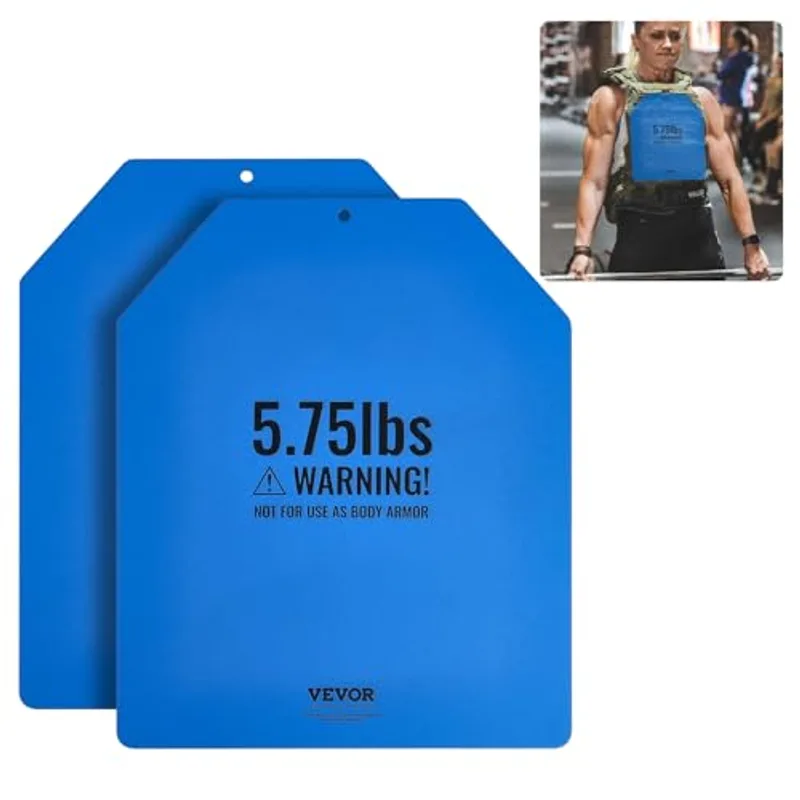
Solid budget option for weight vest loading at $28.90 per pair. Steel construction looks durable, but verify vest compatibility before buying.
Best for: Budget-conscious ruckers with compatible standard weight vests
Check Price — $31.41Specifications
| Price | $31.41 |
| Weight | 11 lbs |
| Dimensions | 0.2H x 9.8W x 11.9L in |
| Material | Steel |
Durability
These plates use heavy-duty steel construction with rounded corners and smooth edges, suggesting decent longevity for the price point. The three-layer bubble wrap packaging indicates VEVOR takes shipping damage seriously, which matters for steel products prone to chipping.
Steel plates typically outlast other materials, and at 5.75 lbs each, these sit in a manageable weight range that reduces stress on vest stitching. The main durability concern is the finish quality—budget steel plates sometimes develop surface rust if exposed to moisture during outdoor rucks. Without user reviews confirming long-term performance, this remains an unknown.
Comfort
VEVOR markets these as "contoured ergonomic fit" plates, but comfort depends entirely on your vest's pocket design. The rounded corners and smooth edges prevent sharp contact points, which helps during movement-intensive training.
At 5.75 lbs per plate, the weight distribution should feel balanced in most standard vests. However, steel plates lack the contouring of premium curved designs, so expect a flatter profile that may shift slightly during dynamic movements. The comfort equation here depends more on your vest quality than the plates themselves—these are basic inserts, not precision-engineered comfort solutions.
Features
The standout feature is compatibility with "a variety of weighted vests," though VEVOR doesn't specify dimensions or which vests work best. This vagueness creates a compatibility gamble—measure your vest pockets before ordering.
The weight progression system (5.75, 8.75, 14.5, and 19.75 lb pairs) allows incremental loading, which matters for progressive overload training. The 11 lb total weight (5.75 per plate) hits a sweet spot for ruckers adding moderate weight without maxing out vest capacity. Just note the prominent warning: these aren't body armor, which seems obvious but addresses liability concerns.
Value
At $28.90 for 11 lbs of steel plates, you're paying roughly $2.63 per pound—competitive for weight vest inserts. Budget-conscious ruckers will appreciate the price, especially compared to brand-name plates that often exceed $4-5 per pound.
The value proposition weakens without user reviews confirming fit and durability. You're taking a calculated risk on compatibility and long-term performance. For someone with a compatible vest looking to add affordable weight, this works. For someone unsure about fit or needing proven reliability, spending more on established brands makes sense. The three-layer packaging adds perceived value by protecting your investment during shipping.
Pros & Cons
Pros
- ✓ Affordable at $2.63 per pound of steel weight
- ✓ Rounded corners and smooth edges prevent hotspots
- ✓ Multiple weight options for progressive training
- ✓ Heavy-duty steel construction promises longevity
- ✓ Careful packaging reduces shipping damage risk
Cons
- ✗ No user reviews to confirm performance claims
- ✗ Compatibility details vague—dimensions not specified
- ✗ Basic flat design lacks premium contouring
- ✗ May develop surface rust without protective coating
Frequently Asked Questions
Will these plates fit my weight vest?
VEVOR claims broad compatibility but doesn't provide exact dimensions. Measure your vest pockets before ordering—standard plates typically fit vests with 10x8 inch or larger pockets, but verify with your specific vest manufacturer.
Can I use these plates for rucking?
Yes, if your vest allows it. At 5.75 lbs each, these work well for moderate weight rucking. Steel plates add weight without excessive bulk, though a proper rucking backpack with dedicated plate compartments offers better load distribution for serious distance work.
How do I prevent rust on steel plates?
Keep them dry and store in a climate-controlled space. Wipe down after sweaty workouts and consider applying a thin coat of oil if storing long-term. Avoid leaving wet plates in your vest or exposing them to outdoor elements.
Are these better than sandbags for vest weight?
Steel plates offer consistent weight and easier handling than sandbags. They don't shift or leak, and they're more compact. Sandbags cost less but create uneven weight distribution. For structured training, steel plates win.