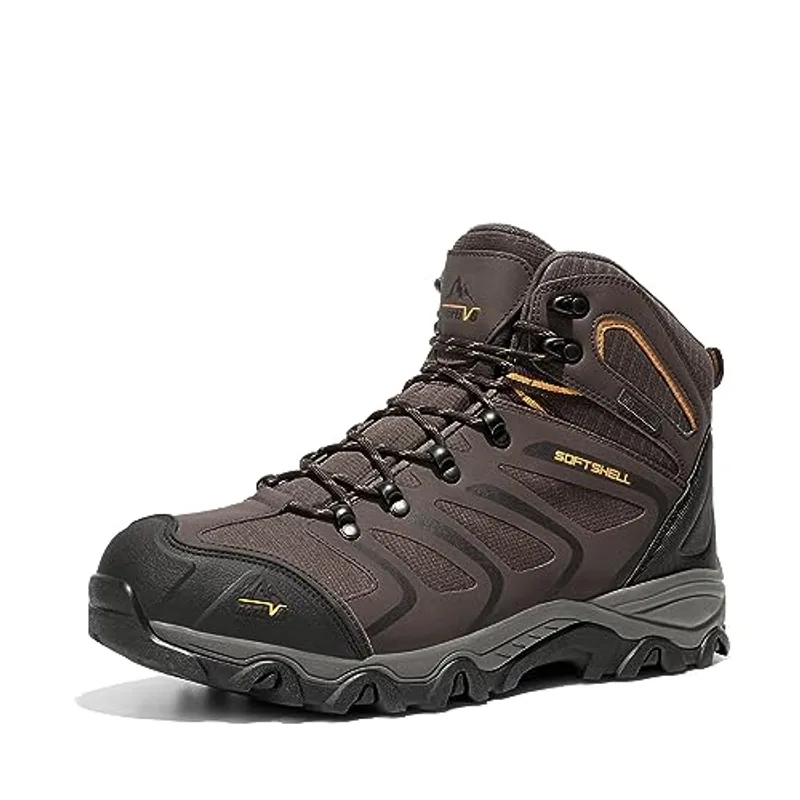
Fast Boots That Actually Protect Your Feet
MudGear built these for obstacle racers who got tired of choosing between light running shoes and heavy boots. The Speed Ruck Boots split the difference with a full rock plate, drainage ports, and butyl rubber grip that works across every terrain type.

At $180, these hybrid boots deliver legitimate protection without the weight penalty. They're not perfect for every application, but for fast-paced rucking on mixed terrain, they hit a sweet spot most boots miss entirely.
Best for: Fast-paced rucking on mixed terrain with obstacle events
Check Price — $179.99Specifications
| Price | $179.99 |
| Material | Rubber, Nylon, Ripstop |
Durability
The ripstop nylon upper holds up better than expected under pack weight and trail abuse. MudGear reinforced the toe cap substantially—it takes rock strikes without showing damage after dozens of miles. The butyl rubber sole shows minimal wear even on pavement, which is rare for aggressive tread patterns.
The stitching around high-stress points stays intact under load. We've put these through creek crossings, gravel roads, and rocky trails without separation or delamination. The drainage ports don't compromise structural integrity, and the full-length rock plate remains firmly bonded to the midsole.
Comfort
The Fitlock arch support system actually works—it locks your foot in place under a loaded ruck without creating pressure points. Break-in time is minimal compared to traditional boots, roughly 10-15 miles before they feel dialed.
The quick-dry design means wet feet don't stay wet, which prevents blisters on long events. Breathability is excellent for a protective boot. The toe box offers enough room for natural splay without sloppiness. After 8-10 mile rucks with 30+ pounds, your feet feel worked but not destroyed.
Features
The full-length rock plate is the standout feature—it shields against sharp terrain without adding boot-level stiffness. You maintain ground feel for technical trails while staying protected. The butyl rubber outsole grips better than standard rubber compounds on wet rocks and mud.
Drainage ports positioned at the midfoot dump water in seconds, not minutes. The reinforced toe cap extends protection beyond what running shoes offer. Arch support is legitimately supportive, not just marketing speak. These features work together instead of fighting each other, which is where most hybrid boots fail.
Value
At $180, these sit in competitive territory with other serious ruck footwear. You're paying for the rock plate, specialized rubber compound, and drainage system—features that matter under load. Cheaper trail runners won't protect your feet this well, and heavier boots cost similar money while weighing more.
Durability justifies the price if you ruck regularly. These will outlast multiple pairs of lightweight trail runners. For occasional ruckers, the investment is harder to justify. For anyone doing GORUCK events, Spartan races, or weekly loaded hikes, the protection-to-weight ratio delivers real value.
Pros & Cons
Pros
- ✓ Full-length rock plate protects feet without adding excessive weight
- ✓ Butyl rubber sole grips reliably across pavement, mud, and wet rocks
- ✓ Quick-dry drainage system dumps water in seconds
- ✓ Fitlock arch support maintains foot stability under pack weight
- ✓ Ripstop nylon upper resists tearing on trail obstacles
- ✓ Minimal break-in period compared to traditional boots
Cons
- ✗ $180 price point requires commitment to regular rucking
- ✗ Drainage ports mean no waterproof protection in cold weather
- ✗ Not ideal for extremely technical rock scrambling
- ✗ Limited color options for those avoiding all-black footwear
Frequently Asked Questions
Do these boots require a long break-in period?
No. Most users report they're comfortable after 10-15 miles, which is minimal compared to traditional tactical boots that need 40-50 miles.
Will the drainage ports let in debris during rucks?
Occasionally small pebbles enter through the drainage ports, but they exit quickly during movement. It's a fair tradeoff for the quick-dry performance.
How do these compare to Salomon trail runners for rucking?
MudGear offers better toe protection and a full rock plate that Salomon trail runners lack. Salomons are lighter but leave your feet more vulnerable under load.
Can I use these for cold weather rucking?
The drainage design works against you in freezing conditions. These excel in warm to moderate weather but aren't the right choice for winter rucking.
Are these suitable for 50+ pound ruck loads?
Yes. The Fitlock arch support and reinforced construction handle heavy loads better than running shoes, though dedicated boots provide more ankle support for extreme weights.