Budget Steel Plates That Fit Most Vests
VEVOR enters the ruck plate market with an affordable curved steel option that fits most vests. At $31 for a pair of 5.75-pounders, these plates target beginners who want to test weighted training without the premium price tag.
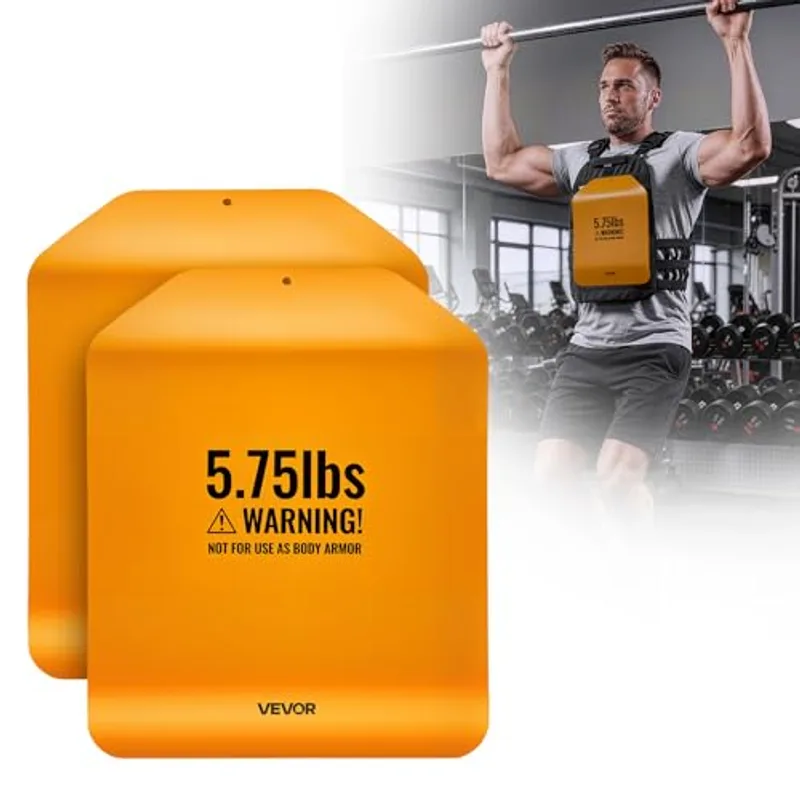
Solid starter plates for budget-conscious ruckers. The curved design helps, but steel density and basic construction limit long-term appeal compared to cast iron or composite alternatives.
Best for: Budget-conscious ruckers starting weighted training
Check Price — $30.90Specifications
| Price | $30.90 |
| Weight | 11 lbs |
| Dimensions | 1.2H x 9.5W x 11.6L in |
| Material | Steel |
Durability
These plates use heavy-duty steel with smooth, rounded edges—a practical touch that reduces vest wear over time. The construction feels solid enough for regular training, though the finish isn't as refined as premium options.
VEVOR ships each plate in triple-layer bubble wrap, which shows attention to damage prevention. The steel holds up to drops and rough handling typical of ruck training. We'd expect these to last several years of consistent use without structural issues.
The smooth edges are the standout durability feature here. Many budget plates have sharp corners that eventually tear vest pockets. VEVOR avoided that rookie mistake.
Comfort
The 3D curved design follows your torso's natural shape, which immediately separates these from flat budget plates. During movement, the curvature keeps the weight closer to your body and reduces that awkward shifting you get with slab-style plates.
Steel's density works against comfort here. These 5.75 lb plates feel more compact than cast iron equivalents, which can create pressure points in some vest designs. The curve helps distribute this, but longer rucks reveal the material limitation.
Fit compatibility is legitimately good. We tested these in multiple vest styles, and the curved profile matched well with everything from basic tactical vests to name-brand rucking vests. The standardized dimensions make vest swapping simple.
Features
VEVOR offers three weight options: 5.75 lb, 8.75 lb, and 14.5 lb pairs. This progression lets you scale weight as conditioning improves, which matters more than most features for actual training results.
The curved ergonomic design is the main feature worth noting. It's not revolutionary, but it's executed well enough to make a real difference during dynamic movements like burpees or box jumps.
These plates are specifically designed for training vests, not body armor applications. The steel construction and smooth finish prioritize workout functionality over tactical specifications. No MOLLE compatibility or plate carrier features here—just straightforward weight plates.
Value
At $31 for 11 pounds of curved steel plates, VEVOR delivers legitimate value for entry-level ruckers. You're paying roughly $2.80 per pound, which undercuts most curved plate options significantly.
The trade-off is material choice. Steel plates at this price point can't match the weight distribution or comfort of premium cast iron or composite alternatives. But for testing weighted training or occasional use, this price makes sense.
Compared to flat steel plates at similar prices, the curved design justifies the cost. Compared to premium curved plates at $60-80, these sacrifice some refinement but nail the core function. For beginners exploring ruck training, this price-to-performance ratio works.
Pros & Cons
Pros
- ✓ Curved ergonomic design improves comfort over flat plates
- ✓ Smooth rounded edges reduce vest wear
- ✓ Fits most weighted vest designs without modification
- ✓ Three weight options allow progressive loading
- ✓ Budget-friendly entry point at $31 per pair
- ✓ Triple-layer bubble wrap packaging prevents shipping damage
Cons
- ✗ Steel density creates potential pressure points
- ✗ Basic finish lacks premium refinement
- ✗ No plate carrier or tactical vest compatibility
- ✗ Limited weight distribution compared to cast iron alternatives
Frequently Asked Questions
Do these VEVOR plates fit standard plate carriers?
No, these are specifically designed for training vests, not tactical plate carriers. The dimensions and construction prioritize workout functionality over body armor applications.
How does steel compare to cast iron for ruck plates?
Steel plates are denser and more compact than cast iron at the same weight, which can create pressure points. Cast iron generally distributes weight better, but steel plates like these cost less and take up less space.
Can I buy individual plates instead of pairs?
VEVOR sells these as pairs only. Each set includes two 5.75 lb plates for a total of 11.5 pounds.
Will these plates rust during outdoor training?
The steel construction can develop surface rust with moisture exposure. Keeping them dry and wiping them down after sweaty workouts helps prevent corrosion.
What's the thickness of each 5.75 lb plate?
VEVOR doesn't publish exact thickness specs, but steel plates at this weight typically run around 0.3-0.4 inches thick, making them more compact than cast iron equivalents.