Medical-Grade Compression for Recovery-Focused Ruckers
The Physix Gear 20-30 mmHg compression socks bring medical-grade graduated compression to post-ruck recovery. At $19, they promise circulation support and fatigue reduction for athletes who push their legs hard on weighted miles.
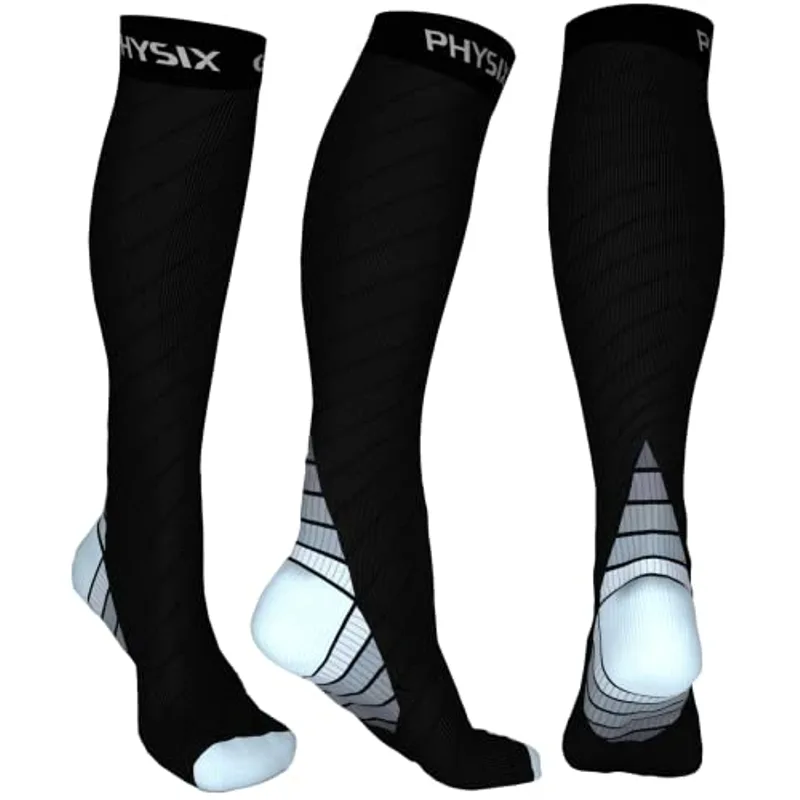
Solid recovery tool with genuine medical-grade compression. Best for post-ruck wear rather than during activity. The price makes them worth trying for circulation support.
Best for: Post-ruck recovery and circulation support under $20
Check Price — $19.22Specifications
| Price | $19.22 |
| Weight | 0.22 lbs |
Durability
These socks use a compression fabric blend designed for repeated wear, though the specific material composition isn't disclosed. The 20-30 mmHg graduated compression rating indicates construction that must maintain tension over time.
At this price point, expect moderate durability. The compression will likely soften after 3-6 months of regular use, which is standard for this category. Reinforced heel and toe areas would improve longevity, but product details don't confirm their presence.
For recovery-focused use (not daily rucking wear), they should last through dozens of cycles. Hand washing extends lifespan significantly compared to machine washing.
Comfort
The 20-30 mmHg compression level sits at the medical-grade threshold—effective for circulation but noticeably tight on first wear. The graduated design means tighter at the ankle, gradually loosening toward the knee, which properly supports blood flow.
Comfort depends entirely on fit. These work best for post-activity recovery when your legs are already fatigued. Wearing them during rucks would feel restrictive for most people. The compression should feel snug but not painful.
Breathability details are missing, which matters for extended wear. Moisture-wicking properties would significantly impact comfort during long recovery periods or overnight wear.
Features
The standout feature is genuine 20-30 mmHg graduated compression, which puts these in the medical-support category rather than mild athletic compression. This level effectively promotes venous return and reduces swelling after heavy load carries.
The socks target multiple use cases—running, nursing, travel, pregnancy—which means they're general-purpose compression rather than ruck-specific. No specialized features for weighted training recovery appear in the specs.
Arch and heel support are mentioned but not detailed. The lack of specific material information (copper-infused claims aside) makes it hard to assess moisture management or odor resistance, both important for recovery gear.
Value
At $19, these hit the sweet spot for trying medical-grade compression without expensive investment. Most 20-30 mmHg socks from established brands run $25-40, making this an accessible entry point.
The value proposition depends on your recovery needs. If you regularly experience leg fatigue, swelling, or circulation issues after weighted rucks, the compression level justifies the cost. For casual ruckers, lighter compression might suffice.
No customer reviews yet means you're taking some risk, but the price softens that concern. If they last even 6 months with regular use, you're getting reasonable value for recovery-focused compression gear.
Pros & Cons
Pros
- ✓ Medical-grade 20-30 mmHg graduated compression
- ✓ Affordable entry into therapeutic compression category
- ✓ Suitable for post-ruck recovery and circulation support
- ✓ Versatile for multiple recovery scenarios beyond rucking
- ✓ Price allows low-risk trial of compression therapy
Cons
- ✗ No customer reviews to verify performance claims
- ✗ Material composition not specified
- ✗ Likely too restrictive for wearing during rucks
- ✗ Durability uncertain at this price point
Frequently Asked Questions
Can I wear these during rucks?
The 20-30 mmHg compression level is medical-grade and likely too restrictive for comfortable movement during weighted carries. These work best for post-ruck recovery wear.
How long should I wear compression socks after rucking?
Most recovery protocols suggest 2-4 hours post-activity for circulation benefits. Some wear them overnight, but start with shorter periods to assess comfort.
What does 20-30 mmHg compression mean?
This indicates medical-grade graduated compression where the sock applies 20-30 millimeters of mercury pressure at the ankle, decreasing up the leg. It's the therapeutic level recommended for athletic recovery and circulation issues.
Are these better than lighter compression socks?
For serious recovery needs after heavy rucks, yes. The higher compression more effectively promotes blood flow and reduces swelling. Casual ruckers might find 15-20 mmHg more comfortable.
How do I know if they fit correctly?
They should feel snug but not painful, tightest at the ankle with gradually less pressure up the leg. Bunching, rolling, or numbness indicates wrong size.