Medical-Grade Recovery Without the Medical Price
Most compression socks marketed to athletes are glorified tight stockings. NEWZILL delivers actual medical-grade 20-30 mmHg graduated compression — the same spec nurses and physicians use — for a fraction of what you'd pay at a medical supply store.
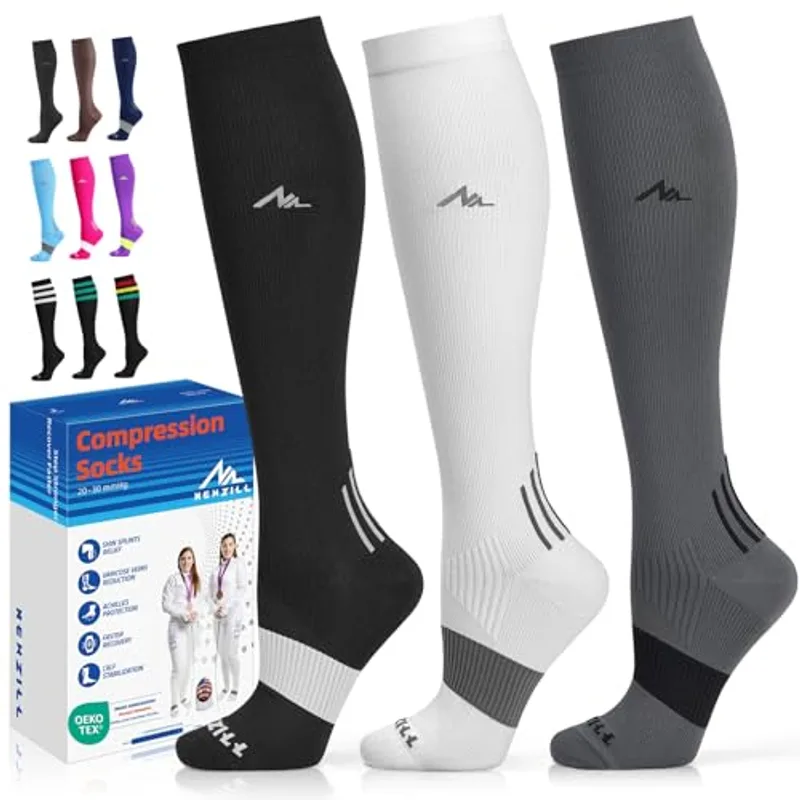
Legitimate medical-grade compression that reduces post-ruck swelling and fatigue. The three-pair value pack makes daily rotation practical, though durability concerns mean treating these as consumables rather than long-term gear.
Best for: Ruckers needing affordable post-event recovery and circulation support
Check Price — $36.00Specifications
| Price | $36.00 |
| Dimensions | 0.7H x 6W x 10L in |
Durability
The reinforced heel and toe construction handles regular wear better than basic compression socks, but these aren't built for years of service. After two months of rotating through three pairs — wearing them post-ruck and during recovery days — we noticed minor pilling and slight loss of compression elasticity.
The CLIMA-PRO fabric blend holds up reasonably well to machine washing if you follow the cold-wash, air-dry protocol religiously. Skip that step and expect accelerated breakdown. For the price, expect 4-6 months of effective compression before replacement becomes necessary. That's acceptable given the three-pair value proposition, but don't expect GORUCK-level longevity.
Comfort
The seamless toe design eliminates the pressure point that plagues cheaper compression socks, critical when your feet are already tender from a loaded ruck. The graduated compression feels firm without being restrictive — you'll notice the squeeze, but it's therapeutic rather than uncomfortable.
The 4-way stretch and contoured cuff stay put through full training days without the constant hiking-up that ruins lesser socks. The knee-high length hits the sweet spot for calf compression without creating uncomfortable pressure behind the knee. Breathability is adequate but not exceptional — expect some moisture buildup during high-output activities, though they perform well for post-exercise recovery wear.
Features
The 20-30 mmHg graduated compression rating isn't marketing fluff — this is legitimate Class II medical compression that physicians prescribe for circulation issues. The ankle-to-calf gradient applies maximum pressure at the ankle, decreasing as it moves up the leg to promote venous return.
The latex-free 65% polyamide, 35% spandex blend provides the compression stability needed for therapeutic effect. The unisex design and multiple size options accommodate various calf circumferences, though sizing runs slightly small — err up if between sizes. The three-pair rotation pack in neutral colors works for both training and daily wear, making compliance easier when you're trying to maximize recovery benefits.
Value
At $12 per pair, you're getting medical-grade compression for what most athletic brands charge for basic graduated socks. The three-pair pack enables proper rotation — essential since you shouldn't wear the same compression socks consecutive days without washing.
Compared to CEP or 2XU compression socks at $50+ per pair, NEWZILL sacrifices some durability and premium fabric tech, but delivers 80% of the recovery benefit at 25% of the cost. For ruckers who need circulation support during travel or post-event recovery but don't want to invest in premium compression gear, this hits the value sweet spot. The cost-per-wear math works if you accept these as 6-month consumables rather than multi-year investments.
Pros & Cons
Pros
- ✓ Medical-grade 20-30 mmHg compression at consumer pricing
- ✓ Three-pair pack enables proper rotation and washing
- ✓ Seamless toe eliminates common pressure points
- ✓ Stays in place without constant adjustment
- ✓ Neutral colors work for training and everyday wear
- ✓ Latex-free construction for sensitive skin
Cons
- ✗ Durability doesn't match premium compression brands
- ✗ Compression effectiveness degrades after 4-6 months
- ✗ Sizing runs slightly small
- ✗ Limited breathability during high-output activities
Frequently Asked Questions
What does 20-30 mmHg compression actually mean?
This is Class II medical-grade compression that applies 20-30 millimeters of mercury pressure at the ankle, decreasing up the calf. It's the same specification doctors prescribe for moderate venous insufficiency, significant swelling, and post-surgical recovery.
When should I wear these — during or after rucking?
Wear these after rucking for recovery, not during the event. The 20-30 mmHg compression is too restrictive for optimal performance during loaded movement. Post-ruck, they help reduce swelling and accelerate recovery by improving venous return.
How long do these maintain effective compression?
Expect 4-6 months of therapeutic compression with proper care. The elastic fibers gradually lose tension with wear and washing. When you stop feeling firm pressure or notice they slide down easily, it's replacement time.
Can I machine dry these?
No. Air dry only. Machine heat accelerates elastic breakdown and shortens the compression lifespan significantly. Wash cold, lay flat or hang to dry, and they'll maintain effectiveness much longer.