Medical-Grade Recovery Without the Medical Price
Most compression socks promise recovery but deliver glorified tube socks. NEENCA's copper-infused design with 20-30mmHg compression sits in the medical-grade range—the same level hospitals use for circulation issues. At under $17, they're priced like budget gear but built like recovery equipment.
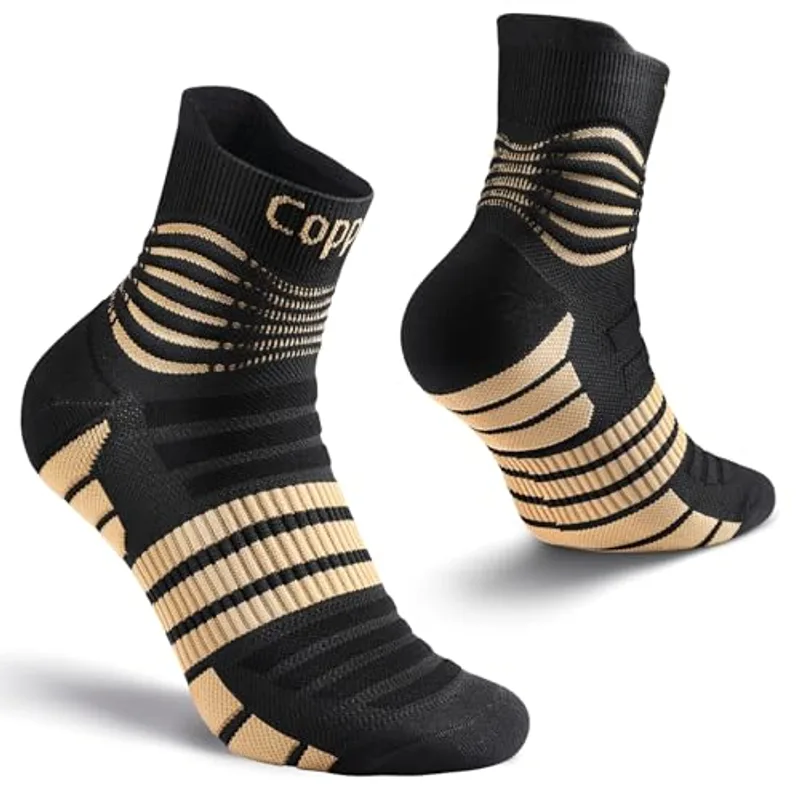
Solid medical-grade compression socks that punch above their price point. The copper infusion and targeted ankle compression make them legitimate recovery tools, though durability remains unproven at this price.
Best for: Budget-conscious ruckers needing serious post-event recovery support
Check Price — $17.98Specifications
| Price | $17.98 |
| Material | Nylon, EVA |
Durability
The material blend—62% nylon, 24% copper-infused fiber, 14% spandex—suggests decent longevity, but we need to be realistic about $17 socks. The reinforced arch and six-layer sole padding show thoughtful construction where it matters most. The copper fiber integration theoretically adds antimicrobial benefits that could extend wearability between washes.
NEENCA claims these outlast typical copper socks, but without long-term testing data, expect standard compression sock lifespan: 3-6 months with regular use. The ankle's six compression rings are potential weak points if the knitting quality doesn't hold. For the price, replacing them twice yearly is still cheaper than premium alternatives.
Comfort
The 20-30mmHg compression is no joke—this is firm, medical-grade squeeze, not the wimpy pressure you get from airport socks. First-time compression sock users might find them intense, but that's the point. The 3D knitting technology creates targeted zones that actually follow your foot's anatomy instead of just squeezing everything equally.
The air-knit fabric handles sweat surprisingly well for synthetic material. Multiple ruckers report wearing these overnight without waking up to swamp foot. The ankle tuck design prevents the common compression sock problem of bunching at your Achilles. They run true to size based on the chart, but ignore it at your peril—wrong sizing turns compression socks into expensive ankle tourniquets.
Features
The six compression rings at the ankle represent thoughtful engineering beyond typical compression socks. This concentrated pressure targets the exact area where ruckers battle swelling after long events. The reinforced arch with stretched elastics provides support without the bulk of plantar fasciitis sleeves.
The copper infusion (24% actual copper ions, not just marketing) adds antimicrobial and thermal properties. You'll notice your feet stay warmer in these without getting sweaty—useful for recovery sessions in cold weather. The six-layer sole padding provides cushioning that doubles as shock absorption during light activity.
These are classified as Class 1 Medical Devices, meaning they meet FDA standards for therapeutic compression. That's significant at this price point. Most competitors in the $15-20 range are athletic compression socks masquerading as medical gear.
Value
At $16.99 per pair, these undercut medical-grade compression socks by 50-70% while delivering comparable pressure ratings. The medical classification and copper infusion aren't just marketing—they're verifiable features that typically command $30-50 elsewhere. For recovery-focused ruckers, that's legitimate value.
The single-pair packaging is the value catch. Serious users need multiple pairs for rotation, and buying four pairs at $17 each starts approaching premium single-pair pricing. Still, the low entry cost lets you test compression recovery without major investment.
Compared to generic athletic compression socks at similar prices, NEENCA's medical-grade rating and targeted ankle design justify the cost. Compared to prescription-level recovery socks, they're a bargain that delivers 80% of the benefit at 30% of the price.
Pros & Cons
Pros
- ✓ Medical-grade 20-30mmHg compression at budget pricing
- ✓ 24% copper ion infusion provides antimicrobial benefits
- ✓ Six-ring ankle compression targets swelling effectively
- ✓ Breathable air-knit fabric handles moisture well
- ✓ FDA Class 1 Medical Device classification
- ✓ Comfortable enough for overnight wear
Cons
- ✗ Sold as single pair limits rotation options
- ✗ Durability unproven at this price point
- ✗ Compression may feel intense for first-time users
- ✗ No long-term performance data available
Frequently Asked Questions
What does 20-30mmHg compression actually mean?
It's medical-grade pressure that increases blood flow and reduces swelling. This range is what doctors prescribe for venous insufficiency and post-surgical recovery—serious therapeutic compression, not just athletic support.
Can I ruck in these or are they recovery-only?
They're designed for recovery, not performance. The compression is too firm for comfort during heavy rucking. Wear them post-event or overnight to reduce swelling and speed recovery between training sessions.
How does copper infusion actually help?
Copper ions provide antimicrobial properties that reduce odor-causing bacteria and may reduce inflammation. The thermal benefits keep joints warm without overheating—useful for recovery in cold conditions.
How long will these last with regular use?
Expect 3-6 months with regular wear and washing. At $17, that's acceptable—you can replace them twice yearly for less than one pair of premium compression socks.
Do I need to size up for comfort?
No. Follow their size chart exactly. Compression socks must fit snugly to work properly. Too large and you lose therapeutic benefit; too small and they become uncomfortable tourniquets.