Budget Compression for Recovery-Focused Ruckers
Laite Hebe's 4-pack compression socks bring 15-20 mmHg graduated compression at an entry-level price. For ruckers prioritizing post-training recovery without breaking the bank, these offer basic circulation support in a machine-washable package.
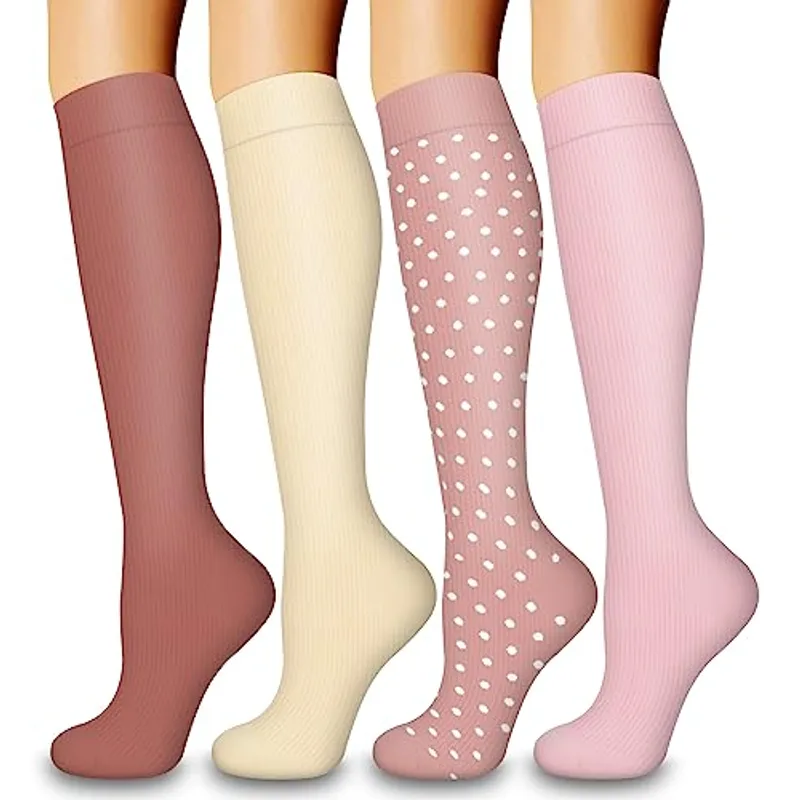
Solid budget option for light recovery work. The 15-20 mmHg compression is mild but functional for post-ruck circulation support and daily wear between training sessions.
Best for: Budget-conscious ruckers needing light recovery compression
Check Price — $8.99Specifications
| Price | $8.99 |
| Material | Nylon |
Durability
Nylon blend construction provides adequate durability for the price point, though longevity questions remain without extended field testing. Machine washability is a practical feature for weekly rotation use.
The knee-high design uses a stretch knit that must balance compression support with easy on-off functionality. This compromise typically means faster wear at stress points compared to medical-grade alternatives. For a four-pack at this price, expect seasonal replacement rather than multi-year durability.
Seam quality and reinforcement at toe and heel areas will determine real-world longevity. Budget compression socks often show wear within 3-6 months of regular use.
Comfort
The 15-20 mmHg compression level sits at the lower end of therapeutic ranges—gentle enough for all-day wear but potentially insufficient for serious recovery needs. The nylon blend offers stretch and breathability for extended wear during work shifts or travel.
Knee-high coverage provides calf support without the bulk of full compression tights. The stretchy knit aids entry and removal, though this flexibility may reduce compression effectiveness over time. Fit depends heavily on matching both shoe size and calf circumference to the manufacturer's sizing chart.
For post-ruck recovery, these work best as light circulation aids rather than serious compression therapy. They're comfortable enough for desk work, travel, or casual wear between training sessions.
Features
Graduated compression design targets circulation from ankle to calf, following standard compression sock methodology. The 15-20 mmHg rating qualifies as light support—appropriate for prevention rather than treatment of serious circulation issues.
The four-pair value pack includes multiple colors and patterns for rotation throughout the week. Machine-washable construction simplifies maintenance, though repeated washing at high temperatures may degrade compression effectiveness over time.
Marketed toward nurses, teachers, and active workers, these socks address general leg fatigue rather than sport-specific recovery needs. Ruckers seeking serious post-training compression should consider higher mmHg ratings (20-30 or 30-40) for more aggressive recovery protocols.
Value
At $9.99 for four pairs, the value proposition is straightforward—approximately $2.50 per pair puts these among the most affordable compression options available. For ruckers testing compression recovery for the first time or needing basic circulation support, the low entry cost removes financial risk.
The trade-off between price and performance is predictable. Medical-grade compression socks typically cost $15-30 per pair and deliver higher compression ratings with better durability. These sacrifice longevity and compression strength for accessibility.
Best suited for budget-conscious athletes who need light recovery support between training cycles or want compression socks for travel and daily wear. The four-pack format supports weekly rotation, extending practical lifespan through distributed use.
Pros & Cons
Pros
- ✓ Four-pair pack at $2.50 per pair delivers strong budget value
- ✓ Machine-washable for easy maintenance and rotation
- ✓ 15-20 mmHg compression suitable for daily wear and light recovery
- ✓ Multiple colors and patterns included for variety
- ✓ Gentle enough for all-day comfort during work or travel
Cons
- ✗ Lower compression rating may be insufficient for serious recovery needs
- ✗ Nylon durability likely limited compared to medical-grade options
- ✗ No specific rucking or athletic design features
- ✗ Sizing requires both shoe size and calf measurement for proper fit
Frequently Asked Questions
Is 15-20 mmHg compression enough for post-ruck recovery?
It provides light support suitable for circulation and fatigue reduction, but serious recovery typically requires 20-30 mmHg or higher compression ratings.
How long do these compression socks typically last?
At this price point, expect 3-6 months of regular use before compression effectiveness and fabric integrity decline noticeably.
Can I wear these during rucking workouts?
Yes, though they're designed more for recovery and daily wear. The 15-20 mmHg compression won't restrict movement but may not provide significant performance benefits during training.
How should I size these compression socks?
Match both your shoe size and calf circumference to the manufacturer's sizing chart. Compression socks must fit properly to deliver effective graduated pressure.