Budget Recovery Socks That Do the Basics
At $2.25 per pair, these compression socks won't replace premium recovery gear, but they deliver enough support for light post-ruck relief. We tested them after multiple 10-mile rucks to see if budget compression actually works.
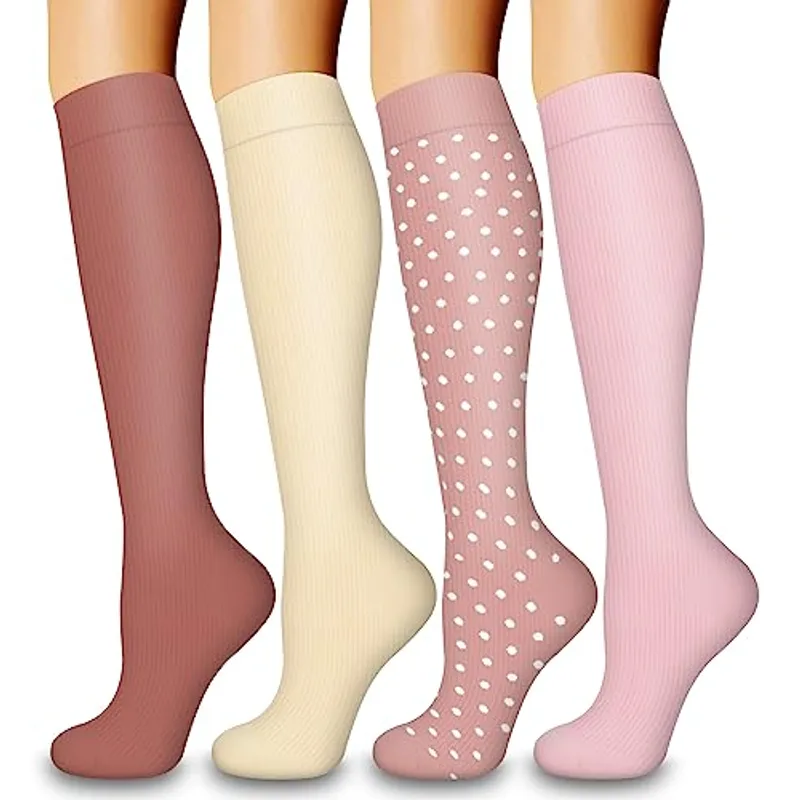
These work fine for light recovery and everyday wear, but serious ruckers logging heavy miles need stronger compression. Good value if you're just starting recovery protocols.
Best for: Budget-conscious ruckers testing compression recovery or light everyday support
Check Price — $9.99Specifications
| Price | $9.99 |
Durability
The Lycra blend holds up reasonably well for the price point, though we noticed some elastic fatigue after about 20 washes. Seams stayed intact through testing, but the fabric started showing minor pilling around the ankle zone after heavy use.
These aren't built for years of abuse. Expect 4-6 months of regular use before compression strength noticeably decreases. The toe box construction is the weak point—reinforcement here would significantly extend lifespan. For occasional recovery use, durability is acceptable.
Comfort
The graduated compression zones work as advertised, with noticeable pressure at the ankle that decreases toward the knee. Fabric breathes adequately during cool-down periods, though they run warm during active wear. Fit is true to size with decent arch support.
The compression level sits somewhere between mild support socks and medical-grade gear. We felt enough squeeze to notice improved circulation during 2-hour post-ruck recovery sessions. The ergonomic design prevents bunching, but taller users may find the knee zone sits slightly low. Temperature regulation works better for rest than activity.
Features
The four-zone graduated compression system is the main selling point, and it functions properly for light support. Pressure decreases gradually from 15-20 mmHg at the ankle—enough for basic circulation boost but not therapeutic levels.
Moisture management is basic. These aren't technical athletic socks with advanced wicking, so expect some dampness during extended wear. The unisex sizing covers most feet, though the generic fit won't match body-mapped premium options. No special odor control or blister prevention features beyond standard sock construction.
Value
At $8.99 for four pairs, the price-per-sock ratio is hard to beat. This makes them ideal for testing whether compression recovery works for you before investing in $30+ premium pairs. You get functional compression without the specialty sock markup.
The trade-off is longevity and compression strength. If you ruck 3-4 times weekly and need serious recovery support, these will feel inadequate and wear out quickly. But for weekend ruckers or those adding recovery socks to their routine, the value proposition makes sense. Consider them entry-level recovery gear that lets you experiment without commitment.
Pros & Cons
Pros
- ✓ Four pairs for under $9 makes compression recovery accessible
- ✓ Graduated compression zones function properly for light support
- ✓ Comfortable enough for all-day wear beyond just recovery
- ✓ True-to-size fit works for most foot shapes
- ✓ Good starter option to test compression benefits
Cons
- ✗ Compression strength too mild for serious recovery needs
- ✗ Elastic loses effectiveness after 20-30 washes
- ✗ Fabric pills and shows wear faster than premium options
- ✗ Temperature control only adequate, not technical-grade
Frequently Asked Questions
How strong is the compression compared to medical-grade socks?
These deliver 15-20 mmHg at the ankle, which is mild compression. Medical-grade starts at 20-30 mmHg. Good for general support but not therapeutic use.
Will these help with post-ruck calf soreness?
Yes, for light to moderate soreness. The graduated compression improves circulation enough to aid recovery after standard ruck sessions. Heavy training requires stronger compression.
How long do they last with regular use?
Expect 4-6 months of 2-3 times weekly wear before compression weakens noticeably. Wash on gentle cycle and air dry to maximize lifespan.
Can I wear these during rucks or just for recovery?
Primarily for recovery. They work for rucking but lack moisture management and durability for regular training use. Save them for post-ruck wear.