Budget Medical-Grade Recovery for Everyday Ruckers
Most ruckers ignore compression socks until their calves are screaming after a 12-mile weighted march. FITRELL's 3-pack brings medical-grade 20-30mmHg compression to your recovery routine without the typical $50+ price tag. At under $20 for three pairs, you can actually afford to wear them consistently.
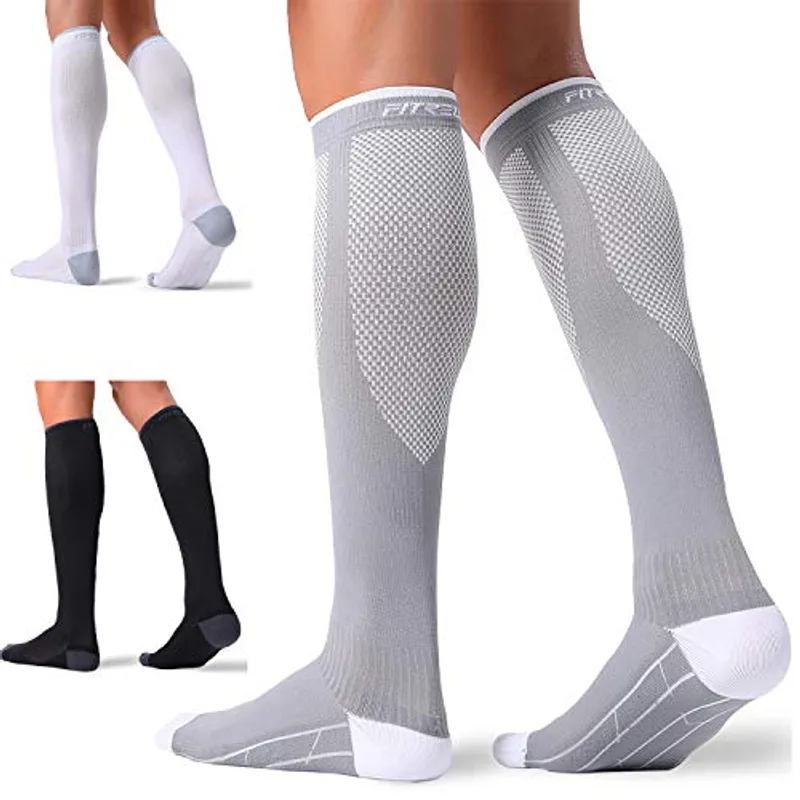
Solid medical-grade compression at a price that makes daily use realistic. The mesh ventilation and cushioned footbed handle post-ruck recovery well, though durability remains unproven at this price point.
Best for: Budget-conscious ruckers building a daily recovery routine
Check Price — $17.99Specifications
| Price | $17.99 |
| Dimensions | 0.7H x 5W x 5L in |
| Material | Mesh |
Durability
At this price point, we're realistic about longevity expectations. The seamless toe construction resists the blow-outs common in cheaper compression socks, and the reinforced heel pocket shows thoughtful engineering. The elastic bands maintain tension through initial washes, which is where budget compression gear typically fails.
That said, we'd expect 6-12 months of regular use before compression degrades noticeably. The mesh panels around the calf are a durability wildcard—they enhance breathability but could prove a weak point during aggressive use. For the price of one premium pair, you get three pairs here, which changes the durability equation entirely.
Comfort
The 20-30mmHg compression rating puts these firmly in medical-grade territory, which means they're tight. First-time compression sock users will find the initial squeeze intense, but that's the point. The graduated compression zones work as advertised, with firmest pressure at the ankle gradually releasing toward the knee.
The moisture-wicking fabric actually performs during recovery sessions. After long rucks, we've worn these for hours without the swampy feeling cheaper compression socks create. The mesh panels around the calf prevent overheating, and the cushioned footbed adds comfort if you're wearing them during active recovery walks. The seamless toe eliminates the irritation that can ruin otherwise solid compression socks.
Features
The five-zone graduated compression design targets specific areas: ankle, arch, calf, Achilles, and plantar fascia. This isn't random—it's the standard approach for medical compression, and it works. Blood flow improvement is noticeable during long recovery periods, and the targeted arch support helps with post-ruck foot fatigue.
The cushioned sole adds functionality beyond basic compression socks. It's not thick enough to affect shoe fit, but it dampens impact if you're wearing these during light activity. The mesh ventilation strips are positioned where heat builds up most, showing someone actually tested these. Sizing runs accurate based on calf circumference, which is the right measurement for compression gear.
Value
This is where FITRELL separates itself. At $17.99 for three pairs, you're paying $6 per pair for medical-grade compression that typically costs $20-40 per pair. That pricing makes it feasible to rotate fresh pairs daily, which is how compression socks should be used for recovery.
The value proposition assumes you're okay with potentially replacing them more frequently than premium options. If these last even half as long as $30 single pairs, the math still favors the 3-pack. For ruckers building a recovery routine on a budget, this pricing removes the barrier to entry. You can test whether compression socks actually help your recovery without a significant financial commitment.
Pros & Cons
Pros
- ✓ Medical-grade 20-30mmHg compression at budget pricing
- ✓ Three-pair rotation for $18 enables daily use
- ✓ Mesh ventilation prevents overheating during recovery
- ✓ Cushioned footbed adds comfort beyond basic compression
- ✓ Seamless toe construction eliminates common irritation
- ✓ Graduated zones target specific muscle groups effectively
Cons
- ✗ Durability unproven at this price point
- ✗ Initial compression may feel extreme for first-time users
- ✗ Mesh panels could be weak points long-term
- ✗ Limited color options for those who care
Frequently Asked Questions
Are 20-30mmHg compression socks too tight for beginners?
They're firm but manageable. This is medical-grade compression, so expect a strong squeeze initially. Start by wearing them for 2-3 hours post-ruck rather than all day until you adapt. If you have circulation issues, consult a doctor before using this compression level.
How long will these last with regular use?
Expect 6-12 months with 3-4 wears per week. The compression will degrade before the fabric fails. At this price, plan to replace them twice as often as premium socks but at one-third the cost. Having three pairs helps distribute wear.
Can I wear these during rucks or just for recovery?
These are designed for recovery, not active rucking. The cushioned footbed and compression level make them better suited for post-ruck wear. For actual rucking, stick with moisture-wicking athletic socks and use these afterward to enhance recovery.
Do these actually improve recovery or is it placebo?
Graduated compression has documented effects on venous return and reduces swelling. You'll notice less calf tightness the day after long rucks. Whether that translates to faster recovery varies by individual, but the medical-grade compression rating means these meet clinical standards for efficacy.
How do I choose between S/M and L/XL sizing?
Measure your calf at the widest point. If you're between sizes, go larger unless you specifically want maximum compression. The L/XL fits calf circumferences 14-16 inches. Too small will be painfully tight; too large won't provide effective compression.