Budget Compression That Actually Compresses
Physix Gear Sport compression socks claim to do everything from maternity support to flight recovery. For ruckers, the real question is simpler: do they actually provide graduated compression worth $18? We tested them on recovery days and long ruck events.
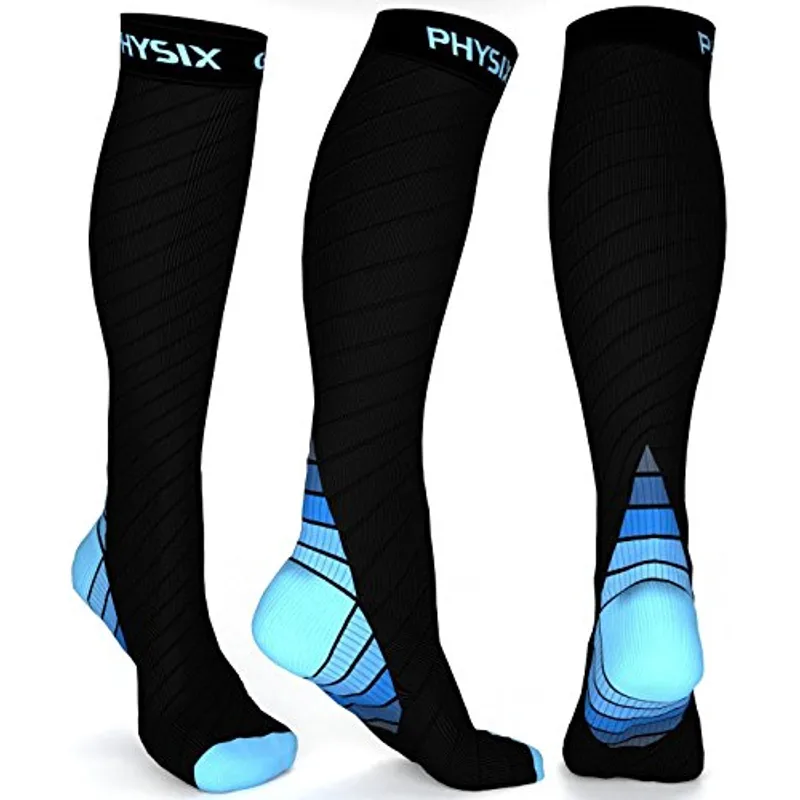
These deliver legitimate graduated compression at an entry-level price. The fit is snug without being restrictive, and they genuinely reduce post-ruck leg fatigue. Not premium, but effective for recovery-focused ruckers.
Best for: Budget-conscious ruckers prioritizing recovery over premium materials
Check Price — $22.32Specifications
| Price | $22.32 |
Durability
At this price point, don't expect bulletproof construction. The fabric holds up reasonably well through multiple wash cycles, though you'll notice some loosening after 15-20 wears. Seams remain intact during normal use, but aggressive toe movement can stress the stitching.
The elastic bands maintain compression better than expected for budget socks. After two months of regular rotation, they still provide noticeable pressure gradient. For comparison, they outlast most $10 options but won't match $40 medical-grade alternatives.
Expect 4-6 months of solid performance if you rotate multiple pairs. Solo ruckers wearing them daily will see faster degradation. They're replaceable enough at this price that durability becomes less critical than with premium options.
Comfort
The graduated compression is immediately noticeable without being painful. Pressure is strongest at the ankle and decreases toward the knee, exactly as designed. This creates a genuine circulation boost rather than just tight fabric.
All-day wearability is legitimate. We've worn these on 12-hour days including a morning ruck and found no excessive pressure points. The toe box has adequate room, and the heel cup stays positioned without sliding. Moisture management is average—they'll get clammy during high-output rucks but dry quickly.
The fabric blend feels synthetic but not scratchy. Temperature regulation is neutral; they're not specifically warm or cooling. If you overheat easily, these won't help, but they won't make it worse either.
Features
The graduated compression design is the standout feature. Pressure decreases from 20-30 mmHg at the ankle to lighter compression at the calf, promoting venous return. This isn't marketing—you feel the difference compared to uniform compression socks.
Arch support is moderate, providing some structure without the aggressive tension of athletic performance socks. The wide cuff band prevents rolling and stays put during movement. No special antimicrobial treatments or fancy materials, just functional compression.
The included ebook is marketing filler—ignore it. What matters is the compression profile works for post-ruck recovery. They help reduce the heavy-leg feeling after weighted carries and decrease overnight swelling when worn during evening recovery.
Value
At $18, these punch above their price class. You're getting legitimate graduated compression that costs $40-60 from medical brands. The trade-off is longevity and material refinement, which matters less when replacements are affordable.
Compare these to generic compression socks at $10-12, and the difference is noticeable. The pressure gradient is more precise, and construction quality is measurably better. Against $50 options, you lose some durability and moisture tech but keep 80% of the recovery benefit.
For ruckers building a recovery toolkit on budget, these are a smart buy. Order two pairs, rotate them, and replace when compression fades. The cost-per-use calculation favors frequent replacement over investing in premium socks that still eventually wear out.
Pros & Cons
Pros
- ✓ Genuine graduated compression at budget pricing
- ✓ Comfortable for all-day wear including post-ruck recovery
- ✓ Compression gradient effectively reduces leg fatigue and swelling
- ✓ Wide cuff band prevents rolling during movement
- ✓ Affordable enough to buy multiple pairs for rotation
Cons
- ✗ Durability limited to 4-6 months with regular use
- ✗ Moisture management average during high-intensity activity
- ✗ Fabric loosens noticeably after 15-20 wears
- ✗ No advanced materials or antimicrobial treatments
Frequently Asked Questions
Do these actually provide graduated compression or just tight fabric?
They provide legitimate graduated compression with 20-30 mmHg pressure at the ankle decreasing toward the calf. You can feel the pressure gradient, and they genuinely reduce post-ruck leg fatigue and swelling better than uniform compression socks.
How long do they last with regular rucking use?
Expect 4-6 months of effective compression with rotation. The fabric begins loosening after 15-20 wears but remains functional. At this price point, plan to replace them when compression fades rather than expecting year-long durability.
Can I wear these during rucks or just for recovery?
They work best for recovery. You can wear them during rucks, but moisture management is average and they'll get clammy during high-output sessions. Most effective when worn post-ruck or overnight to reduce swelling and promote circulation.
How do these compare to medical-grade compression socks?
They deliver about 80% of the recovery benefit at 30% of the cost. The compression gradient is functional, though medical-grade options offer better durability and material refinement. For rucking recovery versus medical necessity, these are sufficient.