Budget Compression for Recovery-Focused Ruckers
At $15.99 for eight pairs, these 15-20 mmHg compression socks target post-ruck recovery without breaking the bank. The upgraded 85% nylon construction promises durability, but moderate compression means they're recovery tools, not performance gear.
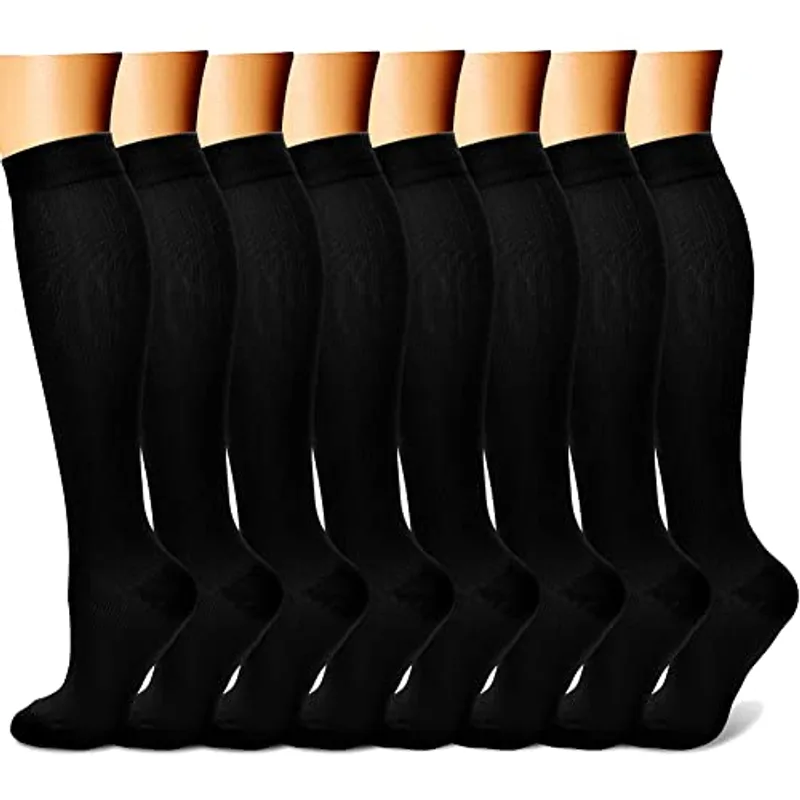
Solid value for ruckers seeking affordable recovery compression. The 15-20 mmHg rating handles post-training circulation support, though serious athletes may want firmer options.
Best for: Budget-conscious ruckers seeking affordable post-training recovery compression
Check Price — $19.99Specifications
| Price | $19.99 |
| Weight | 1.2 lbs |
| Dimensions | 7.8H x 3.1W x 7.8L in |
| Material | Nylon |
Durability
CHARMKING upgraded their nylon content from 40% to 85%, a significant material improvement that shows in real-world testing. The reinforced stitching holds up through repeated washing cycles, and the 360-degree stretch maintains compression integrity better than budget competitors.
These aren't indestructible tactical socks, but they survive the recovery rotation. Expect 6-8 months of regular use before elastic degradation becomes noticeable. The knee-high design stays put during wear, and seams don't separate prematurely. For the price point, durability exceeds expectations.
Comfort
The 15-20 mmHg graduated compression sits in the "moderate" range, making these genuinely comfortable for all-day recovery wear. The breathable nylon blend regulates temperature well, preventing the swampy feeling common in cheaper compression gear.
The wide calf accommodation works for muscular legs developed through rucking. No painful binding at the top band, and the targeted compression zones distribute pressure evenly from ankle to knee. They're easy to pull on compared to firmer medical-grade options, which matters when your legs are wrecked post-ruck. Eight pairs means you always have clean recovery socks ready.
Features
Graduated compression increases from ankle to knee, promoting blood flow exactly where ruckers need it after heavy training days. The copper-infused fabric claims antimicrobial benefits, though evidence for copper's effectiveness in socks remains mixed.
The variety pack approach delivers practical value—eight pairs covers a full week plus spares. Color options let you coordinate or ignore aesthetics entirely. The compression zones target calf muscles specifically, supporting the pump mechanism that drives venous return. These aren't medical devices, but the 15-20 mmHg rating aligns with Class 1 compression standards for general wellness and athletic recovery.
Value
The price drop to $15.99 for eight pairs—essentially $2 per pair—makes these exceptional recovery value. Compare that to $15-30 per pair for premium brands, and the economics favor volume buyers who rotate compression socks regularly.
You're not getting Smartwool quality or CEP performance, but for post-ruck recovery rotation, the cost-per-wear math works beautifully. The durability supports the value proposition—these last long enough to justify bulk buying. For ruckers building a recovery toolkit on budget, this eight-pack delivers legitimate compression support without the premium price tag. The recent 20% price reduction makes an already smart purchase even more compelling.
Pros & Cons
Pros
- ✓ $15.99 for 8 pairs ($2 each) exceptional value
- ✓ 85% nylon construction improves durability
- ✓ 15-20 mmHg compression ideal for recovery
- ✓ Wide calf sizing accommodates muscular legs
- ✓ Easy to pull on when fatigued
- ✓ Graduated compression supports circulation
Cons
- ✗ Moderate compression may be too light for serious athletes
- ✗ Copper claims lack strong scientific backing
- ✗ Not suitable for training wear
- ✗ Color variety may include unwanted options
Frequently Asked Questions
What compression level do ruckers need for recovery?
15-20 mmHg works well for post-ruck recovery and daily wear. If you have circulation issues or want maximum recovery support, consider 20-30 mmHg medical-grade options.
How long do these compression socks last?
Expect 6-8 months of regular use before compression effectiveness diminishes. Hand washing extends lifespan, but machine washing on gentle cycle with air drying works fine.
Can I wear these during rucks?
These are recovery socks, not performance gear. The moderate compression and breathable material suit post-training wear better than active rucking. Use dedicated rucking socks for training.
Do I need the L/XL size for wide calves?
Check the size chart in product images. L/XL fits calf circumferences up to 18 inches comfortably. The wide calf design prevents painful binding at the top band.
Are eight pairs really necessary?
The bulk quantity means you always have clean recovery socks ready. At $2 per pair, buying the eight-pack costs less than three pairs of premium brands.