Budget Compression Sleeve Now Facing Price Reality
BLITZU's ankle compression sleeve promised plantar fasciitis relief at a bargain price. After a 108% price jump to $13.99, this kinesiology-inspired sleeve needs to prove it's worth double what users originally paid.
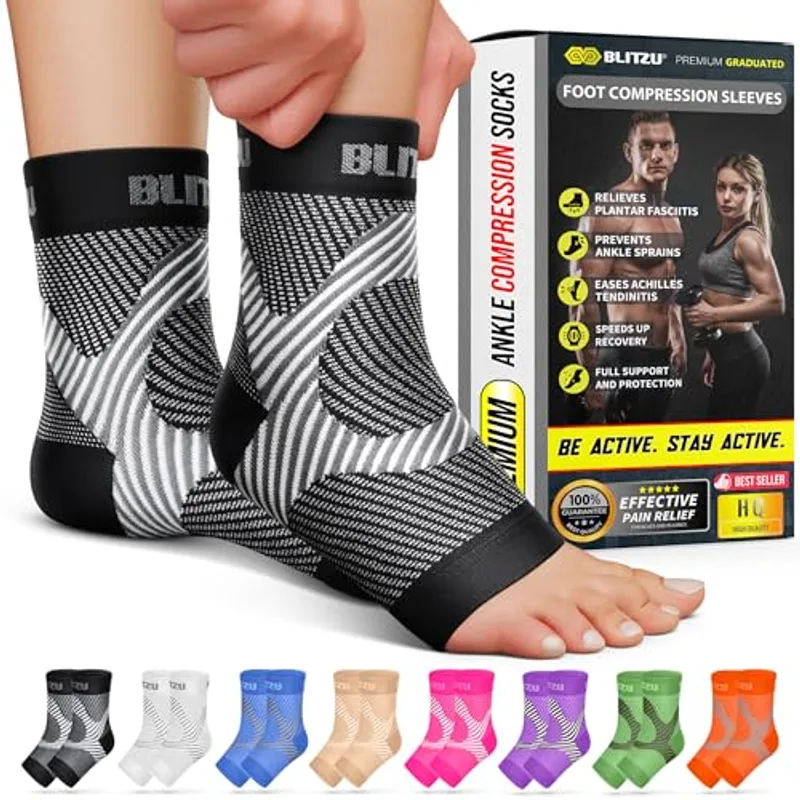
Solid compression design with targeted arch support, but the doubled price point pushes it into competitive territory where durability and material quality become critical questions.
Best for: Ruckers testing compression therapy for foot pain
Check Price — $13.99Specifications
| Price | $13.99 |
| Weight | 0.04 lbs |
Durability
The ankle sleeve uses a blend designed for compression and breathability, but without specific material disclosure, longevity is uncertain. Compression garments typically face wear from repeated stretching and washing, particularly at stress points around the heel and arch.
Kinesiology taping patterns woven into the fabric provide structural support, but these integrated designs can lose elasticity faster than traditional compression sleeves. At the new $13.99 price point, expect 3-6 months of regular use before compression effectiveness diminishes. Seam construction quality will determine whether this sleeve survives daily rucking and training cycles.
Comfort
The breathable fabric construction allows for extended wear during activity, essential for ruckers dealing with plantar fasciitis or ankle issues. Targeted compression zones around the arch and ankle provide support without excessive tightness that restricts movement.
The sleeve design eliminates bulky straps and closures, making it compatible with boots and rucking footwear. However, compression fit depends heavily on accurate sizing—the S-M designation may not accommodate all foot shapes equally. Extended rucking sessions will test whether the sleeve stays positioned or bunches around the ankle joint.
Features
BLITZU incorporates kinesiology taping principles into the sleeve design, creating compression zones that mimic therapeutic taping patterns. This approach targets plantar fasciitis, Achilles tendonitis, and general ankle instability with focused pressure points.
The sleeve provides arch support and ankle stabilization without the bulk of traditional braces—a significant advantage for ruckers who need support but can't sacrifice boot fit. The design accommodates both recovery wear and active use, though it lacks adjustability found in wraparound styles. For rucking applications, this works well under socks and inside boots without creating pressure points.
Value
At $6.73, this was an easy recommendation for ruckers dealing with foot pain. At $13.99, it competes directly with established compression sleeve brands that offer proven durability and better material transparency.
The kinesiology taping feature adds theoretical value, but without long-term durability data at this price point, it's harder to justify over alternatives. For occasional use or testing whether compression helps your specific foot issues, the investment is reasonable. Daily ruckers putting serious miles on their gear may find better value in slightly more expensive sleeves with documented longevity.
Pros & Cons
Pros
- ✓ Kinesiology taping design targets plantar fasciitis specifically
- ✓ Low-profile construction fits inside rucking boots
- ✓ Breathable fabric for extended wear during training
- ✓ Provides arch support without bulk
- ✓ Suitable for both recovery and active use
Cons
- ✗ Price doubled from original $6.73 point
- ✗ No material specifications disclosed
- ✗ Limited sizing may not fit all foot shapes
- ✗ Compression durability unproven at this price tier
Frequently Asked Questions
Will this fit inside rucking boots?
Yes, the low-profile sleeve design fits under socks and inside boots without creating pressure points or fit issues. The compression is tight enough for support but slim enough to work with footwear.
How long does the compression last?
Expect 3-6 months of effective compression with regular use and proper care. Washing in cold water and air drying extends the elastic lifespan of compression garments.
Does this help with plantar fasciitis during rucks?
The kinesiology taping design provides arch support that can reduce plantar fasciitis pain during activity. Results vary by individual, but the compression improves blood flow and reduces inflammation for many users.
Can I wear this all day?
Yes, the breathable fabric supports all-day wear. Start with shorter periods to ensure proper fit and circulation, then extend to full-day use as needed for recovery or preventive support.
What's the difference between S-M and other sizes?
S-M typically fits shoe sizes 5-9. Check the manufacturer's sizing chart for exact measurements, as compression effectiveness depends on accurate fit around your ankle and arch circumference.