Budget Recovery Socks with Recent Price Jump
FuelMeFoot's 3-pack compression socks offer 15-20mmHg support with copper-infused fabric for post-ruck recovery. At $14.99, the recent 37% price increase puts these entry-level recovery socks in a more competitive bracket where durability matters.
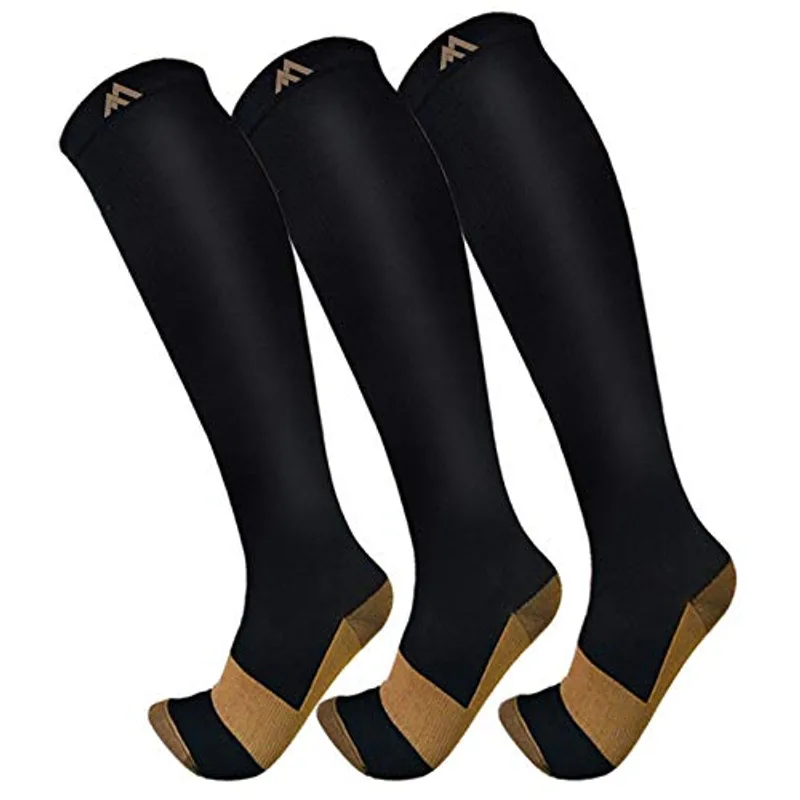
Decent entry-level compression for recovery days, but the price jump diminishes the value proposition. Better options exist at this price point.
Best for: Budget-conscious ruckers needing basic recovery compression
Check Price — $12.99Specifications
| Price | $12.99 |
| Weight | 0.42 lbs |
| Dimensions | 0.7H x 5W x 5L in |
| Material | Nylon |
Durability
The premium nylon construction shows mixed durability potential. At 0.42 pounds for three pairs, these socks feel lightweight but not flimsy. The copper-infused fabric claims odor resistance, which extends practical lifespan between washes.
Machine washable design is convenient, though the hang-dry requirement suggests the compression fibers may not withstand high heat. For ruckers logging serious miles, expect typical compression sock lifespan of 3-6 months with regular rotation. The seams and reinforcement zones will determine real-world durability.
Comfort
The 15-20mmHg compression hits the sweet spot for recovery without feeling restrictive. Knee-high design provides full calf coverage, important for post-ruck circulation support. The nylon blend promises breathability, though actual ventilation depends on your activity level.
Smooth interior construction minimizes chafing during extended wear. The compression gradient should feel supportive without cutting circulation. These work for all-day wear if you're on your feet, though serious ruckers might want firmer compression for heavy training blocks.
Features
Copper infusion targets odor control and claims circulation benefits, though independent verification of copper's effectiveness remains limited. The 15-20mmHg compression level sits in the mild support range, suitable for recovery and general use rather than medical-grade needs.
Three-pair bundles provide rotation options for consistent recovery protocols. The multi-purpose design works across activities, from ruck recovery to standing jobs. Quick-drying capability matters for travel or consecutive training days. However, no specific features address ruck-specific needs like blister prevention or load-bearing support.
Value
At $14.99, these socks face tougher competition than their previous $10.91 price point. You're paying roughly $5 per pair, which enters territory where established compression brands offer proven durability and performance.
The three-pack format still provides rotation value, but the 37% price increase removes the budget advantage these once held. For casual ruckers needing basic recovery support, the value holds. Serious athletes might invest the difference in compression socks with documented performance benefits and longer warranties.
Pros & Cons
Pros
- ✓ 15-20mmHg compression ideal for recovery
- ✓ Three pairs allow proper rotation
- ✓ Machine washable for easy maintenance
- ✓ Copper infusion targets odor control
- ✓ Knee-high coverage supports full calf
Cons
- ✗ Recent 37% price increase hurts value
- ✗ No customer reviews to verify claims
- ✗ Hang dry only limits convenience
- ✗ Generic design lacks ruck-specific features
Frequently Asked Questions
What compression level do I need for rucking recovery?
15-20mmHg works for general recovery and circulation support. If you're doing heavy rucks or have circulation issues, consider 20-30mmHg medical-grade compression.
How long do compression socks last?
With proper care and rotation, expect 3-6 months of effective compression. The elastic fibers gradually lose tension over time, reducing support.
Can I wear these during rucks?
These work for light rucks, but they're designed for recovery wear. For actual rucking, prioritize moisture-wicking hiking socks with blister prevention.
Does copper infusion actually work?
Copper's antimicrobial properties have some scientific support for odor control. Circulation benefits are less documented than proper compression gradients.