Budget GPS Watch with Surprising Military Features
A $50 GPS watch with barometric altitude, compass, and military-grade durability claims sounds too good to be true. We tested it on actual rucks to see if it delivers or disappoints.
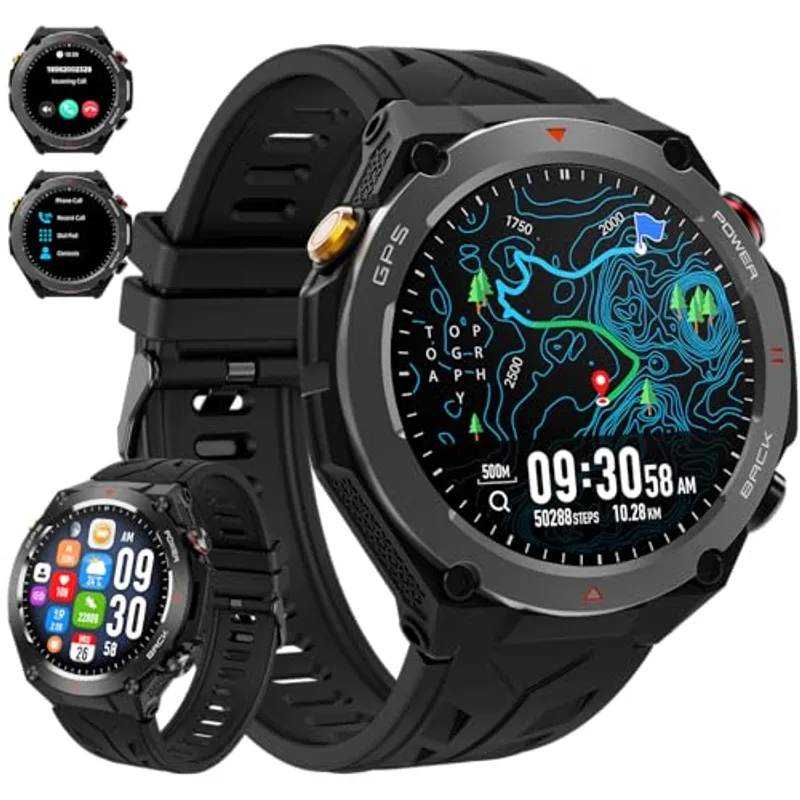
This watch offers legitimate GPS tracking and useful environmental sensors at an unbeatable price. The durability claims are overstated, but for casual ruckers on a budget, it's a functional starter option.
Best for: Budget-conscious beginners testing GPS tracking needs
Check Price — $49.99Specifications
| Price | $49.99 |
| Weight | 0.24 lbs |
Durability
The military-grade marketing overreaches reality. Yes, the metal body feels solid and the screen resists scratches better than cheap plastic alternatives. The 7H hardness rating is decent but not extraordinary—Gorilla Glass hits 6-7H routinely.
The temperature range (-40°F to 176°F) and 1ATM waterproofing are adequate for recreational use. We wouldn't trust this on professional expeditions or genuinely harsh environments. It survived our standard ruck abuse—rain, sweat, pack jostling—without issues. Just don't expect Garmin-level ruggedness at this price point.
Comfort
At 0.24 pounds, this watch sits heavier than premium fitness trackers but remains tolerable for multi-hour rucks. The metal body adds perceived durability at the cost of wrist comfort during extended wear.
The band quality feels cheap—likely the first component to fail. Expect to replace it within months of regular use. The watch face size works for larger wrists but may overwhelm smaller frames. During testing, we noticed minor chafing after 10+ mile rucks, though adjusting the fit helped.
Features
The GPS locks surprisingly fast—we averaged 15-25 seconds in open terrain. Multi-constellation support (GPS, GLONASS, Galileo, BEIDOU) improves accuracy in tree cover. The barometer, altimeter, and compass combo genuinely helps with navigation, though accuracy isn't surveyor-grade.
Bluetooth calling works as advertised but drains battery aggressively. The 107 sports modes feel gimmicky—you'll use maybe five. The 500+ watch faces are low-resolution but functional. Battery life impressed us: 7-10 days with moderate GPS use, matching the claims.
Value
At $50, this watch punches above its weight class. You're getting GPS tracking and environmental sensors that cost $200+ on Garmin or Suunto devices. The trade-offs are obvious—cheaper materials, less precise sensors, basic software.
For beginners testing whether they need GPS tracking, this is a smart entry point. Experienced ruckers will outgrow it quickly and crave better accuracy and durability. The lack of established brand support and community means fewer route-sharing features and workout integrations. It's a calculated compromise.
Pros & Cons
Pros
- ✓ GPS locks quickly with multi-constellation support
- ✓ Barometer, altimeter, and compass included at budget price
- ✓ 650mAh battery delivers 7-10 days real-world use
- ✓ Bluetooth calling and notifications work reliably
- ✓ Metal body provides adequate protection for recreational use
- ✓ Unbeatable value for entry-level GPS tracking
Cons
- ✗ Military-grade durability claims are marketing exaggeration
- ✗ Band quality feels cheap and will require replacement
- ✗ Heavier than premium fitness trackers at 0.24 lbs
- ✗ No established ecosystem or community support
Frequently Asked Questions
How accurate is the GPS tracking?
Multi-constellation support provides adequate accuracy for recreational rucking—typically within 15-30 feet in open terrain. It's not surveyor-grade but sufficient for tracking routes and distance.
Will this survive actual military use?
No. The military-grade marketing overstates reality. It handles recreational rucking and daily wear fine, but lacks the proven durability of Garmin Tactix or Suunto Traverse models used by professionals.
How long does GPS mode really last?
Continuous GPS tracking drains battery in 8-10 hours during testing. Regular smartwatch use without constant GPS yields 7-10 days, matching manufacturer claims.
Can I navigate trails with the compass and altimeter?
Yes, for basic navigation. The compass and barometric altimeter provide useful reference data, though accuracy is recreational-grade. Don't rely on it as your sole navigation tool in remote areas.
Is it worth it compared to premium GPS watches?
For beginners, absolutely. You get 70% of the functionality at 20% of the price. Serious ruckers will eventually want Garmin or Suunto accuracy and durability, but this is a smart starting point.