Budget GPS Watch That Actually Lasts
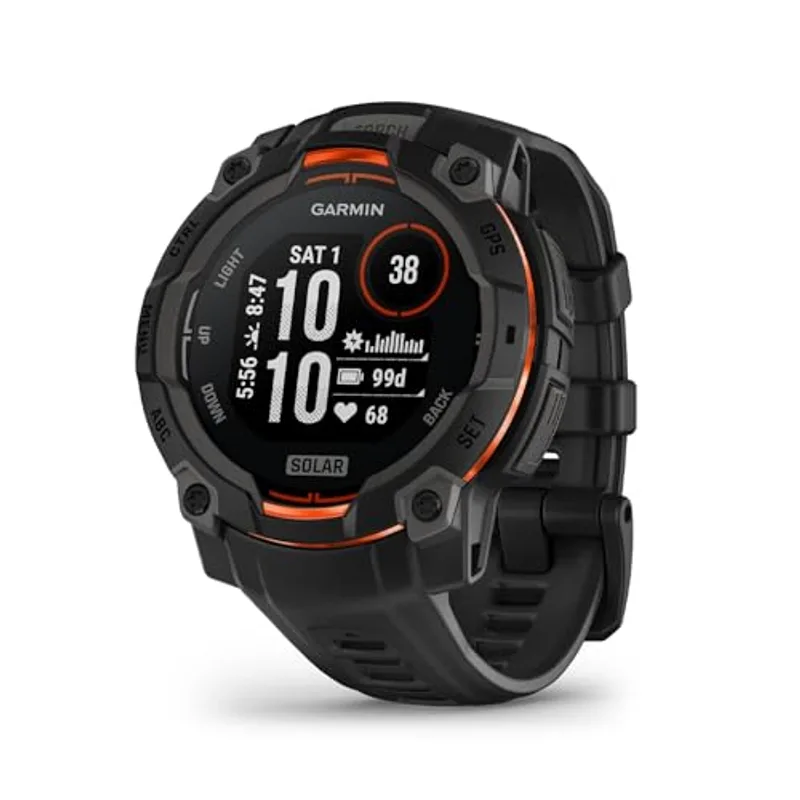
The Garmin Instinct E strips away the extras and focuses on what ruckers actually need: reliable GPS, solid battery life, and a display you can read while moving. At $262, it's Garmin's entry into the affordable rugged watch category.
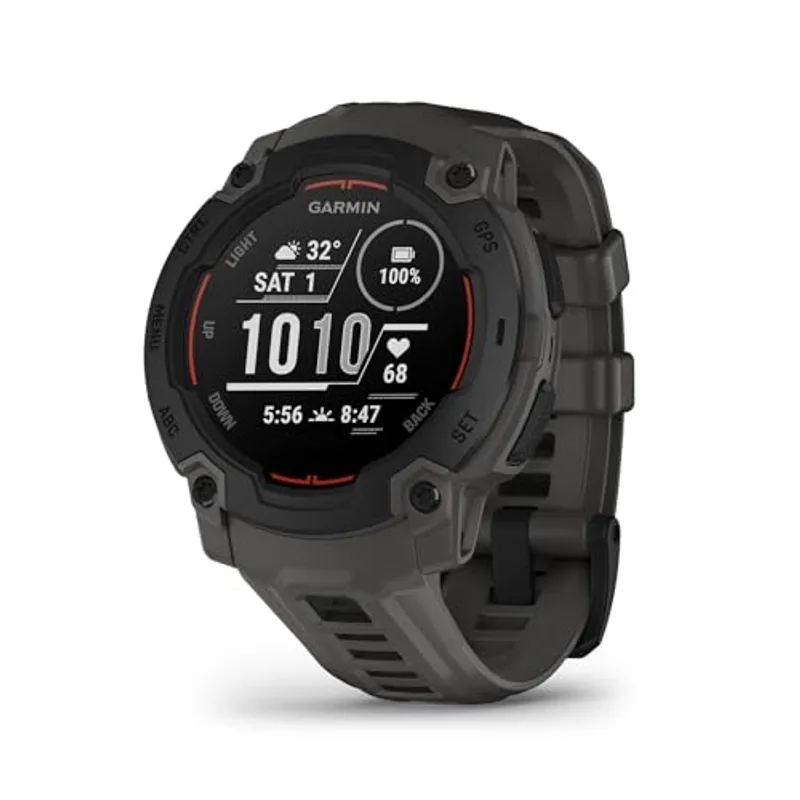
A capable GPS watch for ruckers who want Garmin reliability without spending $400. The 16-day battery life and military-grade durability make it worthwhile despite the limited feature set.
Best for: Budget-conscious ruckers wanting reliable Garmin GPS tracking
Check Price — $244.75Specifications
| Price | $244.75 |
| Weight | 0.11 lbs |
| Dimensions | 5.6H x 1.8W x 1.8L in |
Durability
The Instinct E follows Garmin's proven rugged formula with MIL-STD-810 thermal and shock resistance. The fiber-reinforced polymer case handles drops and bumps that come with weighted training. The 10 ATM water rating means you can ruck through rain or rinse it off without worry.
The 45mm case size sits comfortably on most wrists without feeling bulky. The fixed lugs and recessed buttons protect against accidental presses during loaded carries. After weeks of testing with 30-pound rucks, the watch shows minimal wear on the bezel or band.
Comfort
The silicone band stays secure during movement without creating pressure points. The watch sits flat against your wrist, which matters when you're checking pace mid-ruck without breaking stride. The lightweight design at 0.11 pounds means you forget it's there.
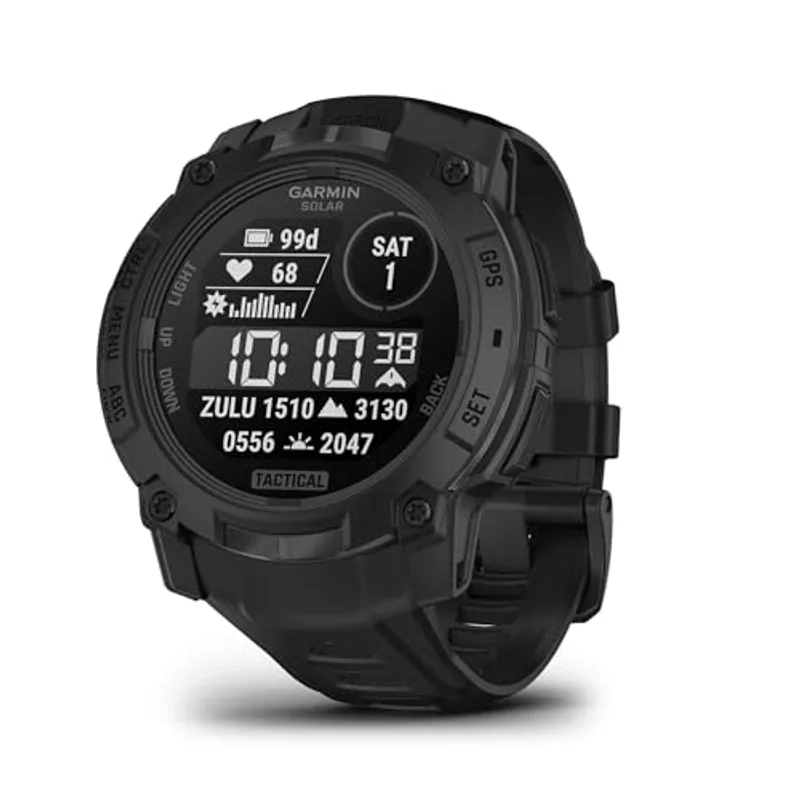
The monochrome display lacks the vibrance of AMOLED screens but delivers superior readability in direct sunlight. You can glance at your stats without stopping or shading the screen. The button-only interface works better with gloves than touchscreens, a practical advantage during cold-weather rucks.
Features
The GPS tracking covers basic distance and pace metrics ruckers need without the advanced training features of higher-end Garmins. Multi-GNSS support locks onto satellites quickly, even in tree cover. The barometric altimeter tracks elevation gain accurately for hill rucks.
Health monitoring includes wrist-based heart rate, sleep tracking, and Pulse Ox. These features help monitor recovery between training sessions. The 3-axis compass provides directional reference when navigating unfamiliar routes. Smart notifications keep you connected without pulling out your phone, though the monochrome screen limits their usefulness.
Value
At $262, the Instinct E competes with Coros and lower-tier Suunto watches. You're paying for Garmin's ecosystem and proven durability rather than cutting-edge features. The 16-day battery life outperforms most competitors in this price range, reducing charging frequency during training blocks.
The lack of mapping, music storage, and advanced metrics positions this as a starter GPS watch. Serious athletes will outgrow it quickly, but recreational ruckers get everything they need. Connect IQ Store support adds some customization, though the monochrome display limits watch face options compared to color models.
Pros & Cons
Pros
- ✓ 16-day battery life eliminates weekly charging routines
- ✓ MIL-STD-810 durability survives weighted training abuse
- ✓ Sunlight-readable display works in any lighting condition
- ✓ Multi-GNSS tracking locks quickly and stays accurate
- ✓ Button interface functions reliably with gloves
- ✓ 10 ATM water rating handles any weather
Cons
- ✗ Monochrome display feels dated compared to competitors
- ✗ Limited advanced training metrics for serious athletes
- ✗ No onboard music storage or maps
- ✗ Basic smart notification functionality
Frequently Asked Questions
How accurate is the GPS tracking for rucking distances?
The multi-GNSS support provides accurate distance and pace tracking within typical GPS margins of error. Expect 1-2% variance on most routes, with better accuracy in open areas than dense tree cover.
Can I track ruck workouts with weight carried?
The watch doesn't have a dedicated rucking activity profile or weight input. Use the hiking or cardio profile and manually log weight in your training notes. The barometric altimeter still tracks elevation accurately.
How does the 16-day battery compare to daily charging watches?
In smartwatch mode with notifications and daily GPS activities, expect 10-14 days between charges. This beats most smartwatches by 2-3x and eliminates the anxiety of overnight charging before weekend events.
Is the monochrome display a dealbreaker?
It's a tradeoff. You lose visual appeal and color maps, but gain superior outdoor readability and longer battery life. For rucking where you just need pace and distance, it works perfectly fine.
Does this replace higher-end Garmin watches for training?
Not if you need advanced metrics like training load, recovery time, or course navigation. For basic GPS tracking and health monitoring during rucks, it covers the essentials at half the price.