Alpine Toughness Meets Endurance Navigation
The COROS APEX 4 brings mountaineering-grade durability to rucking with a titanium case, sapphire display, and battery life that outlasts weekend events. This isn't a fitness tracker trying to be tough—it's a backcountry tool that happens to track workouts.
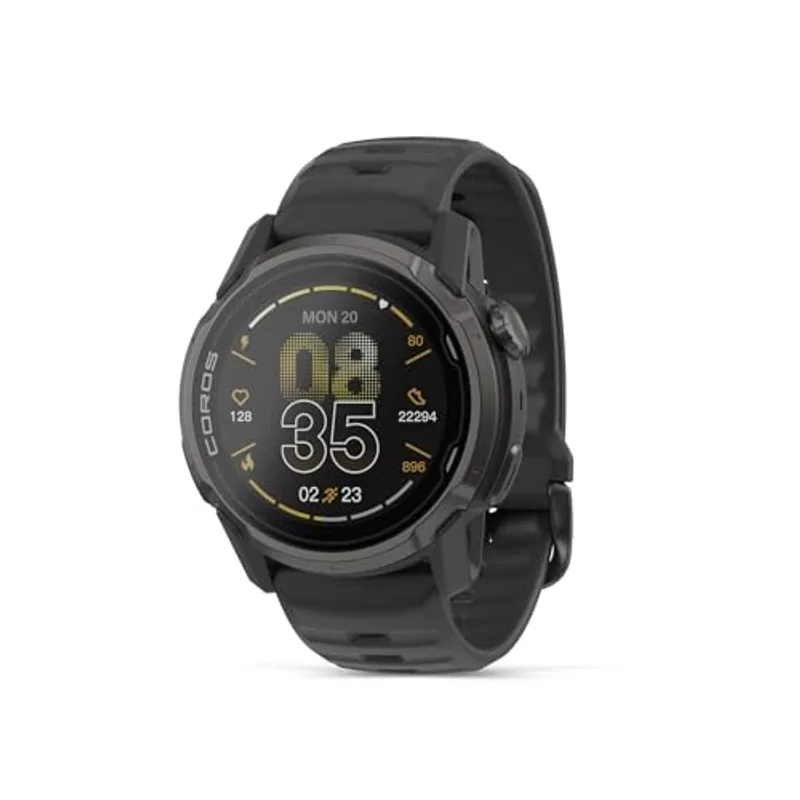
At $429, the APEX 4 delivers serious navigation and battery performance in a lightweight titanium package. It's overkill for casual ruckers but perfect for those who ruck in remote terrain or multi-day events.
Best for: Backcountry ruckers and multi-day event participants needing serious navigation
Check Price — $429.00Specifications
| Price | $429.00 |
| Weight | 0.12 lbs |
| Dimensions | 0.6H x 1.7W x 1.7L in |
| Material | Titanium |
Durability
The titanium case and sapphire glass face serious abuse without complaint. At 0.12 pounds, the APEX 4 disappears on your wrist during heavy rucks, but the reinforced lugs mean the strap mount won't fail when you snag it on gear or brush.
The always-on MIP display stays readable in direct sunlight—critical when you're navigating mid-ruck and don't want to waste time shading the screen. The materials choice here reflects alpine climbing priorities: light enough to matter, tough enough to trust.
This watch treats moisture and temperature swings as non-issues. Whether you're rucking through rain or extreme cold, the APEX 4 keeps functioning without the battery drain touchscreens typically suffer in wet conditions.
Comfort
The 42mm case size works for most wrist sizes without the bulk that makes larger GPS watches uncomfortable under ruck straps or gloves. The titanium construction keeps weight minimal—you'll forget you're wearing it during long events.
The touchscreen interface works even with gloves on, though physical buttons remain primary controls. This hybrid approach means you're not fighting the interface when your hands are wet, cold, or occupied with trekking poles.
The watch band sits flat and doesn't bunch under pack straps or create pressure points during heavy carries. For multi-hour rucks, this detail matters more than most realize until they've dealt with a chunky watch digging into their wrist mile after mile.
Features
The 41-hour all-systems GPS runtime changes the game for long events. Most GPS watches force you to choose between accuracy and battery life—the APEX 4 gives you both without compromise. The dual-frequency GPS locks fast and stays accurate even under tree cover where cheaper watches drift.
Turn-by-turn navigation with offline topo maps means you can plan routes without cell service and follow them confidently. The 30x faster map rendering eliminates the lag that makes other watches frustrating when you need quick navigation checks during movement.
Voice pins let you mark waypoints hands-free—useful when you spot terrain features or cache points during reconnaissance rucks. The speaker and microphone also handle calls, though you'll likely disable this feature during focused training. The vertical algorithms and climbing modes are bonus features most ruckers won't use, but they reveal COROS built this for serious outdoor athletes.
Value
At $429, the APEX 4 costs more than basic GPS watches but less than premium models from Garmin or Suunto with similar capabilities. You're paying for battery life and materials quality that matter during extended backcountry use.
For weekend ruckers sticking to marked trails, this watch offers more navigation capability than necessary. But for anyone doing remote rucks, night navigation training, or multi-day events, the battery life alone justifies the cost—you won't need to carry charging cables or battery banks.
The titanium and sapphire construction means this watch will outlast cheaper alternatives by years. Factor in replacement costs for watches that crack, fail, or need constant charging, and the APEX 4's upfront premium shrinks considerably. This is a buy-once tool for serious users.
Pros & Cons
Pros
- ✓ 41-hour GPS battery life eliminates charging anxiety during long events
- ✓ Titanium construction and sapphire glass handle serious abuse
- ✓ Dual-frequency GPS maintains accuracy under tree cover and in canyons
- ✓ Offline topo maps with turn-by-turn navigation work without cell service
- ✓ 0.12-pound weight disappears on your wrist during heavy rucks
- ✓ Voice pins allow hands-free waypoint marking during movement
Cons
- ✗ $429 price point is steep for casual weekend ruckers
- ✗ Advanced climbing features go unused by most rucking-focused users
- ✗ 42mm size may be too large for smaller wrists
- ✗ Learning curve for full feature utilization takes time
Frequently Asked Questions
How long does the battery actually last during rucking?
With GPS tracking active, expect 41 hours of continuous use. In smartwatch mode without GPS, the APEX 4 lasts up to 34 days. For typical weekend ruck events with 8-12 hours of GPS tracking, you'll finish with 70% battery remaining.
Can I upload custom ruck routes to this watch?
Yes. You can create routes in the COROS app or import GPX files, then sync them to the watch for turn-by-turn navigation. The offline maps mean you can follow these routes without phone connectivity.
Is the touchscreen reliable with wet or gloved hands?
The touchscreen works in wet conditions, and you can operate it with thin gloves. However, COROS designed the APEX 4 with physical buttons as primary controls specifically for situations where touchscreens fail—cold weather, heavy gloves, or sustained wet conditions.
How does this compare to Garmin watches for rucking?
The APEX 4 matches or exceeds Garmin's battery life at a lower price point, with faster map rendering. Garmin offers more third-party app integration and established ecosystem. For pure rucking and navigation, the APEX 4 delivers better value. For broader fitness tracking integration, Garmin has the edge.
Will this watch survive GORUCK events?
The titanium case and sapphire glass are built for alpine climbing abuse, which exceeds typical GORUCK event demands. The water resistance, impact protection, and battery life make it well-suited for endurance events. Many COROS users report years of heavy use without hardware failures.