Budget-Friendly Durability for Weighted Training
The Acefit training sandbag brings military-grade materials to the budget category without the typical compromises. At $50 for a 50-pound capacity bag, it challenges the assumption that quality weighted training gear requires triple-digit investments.
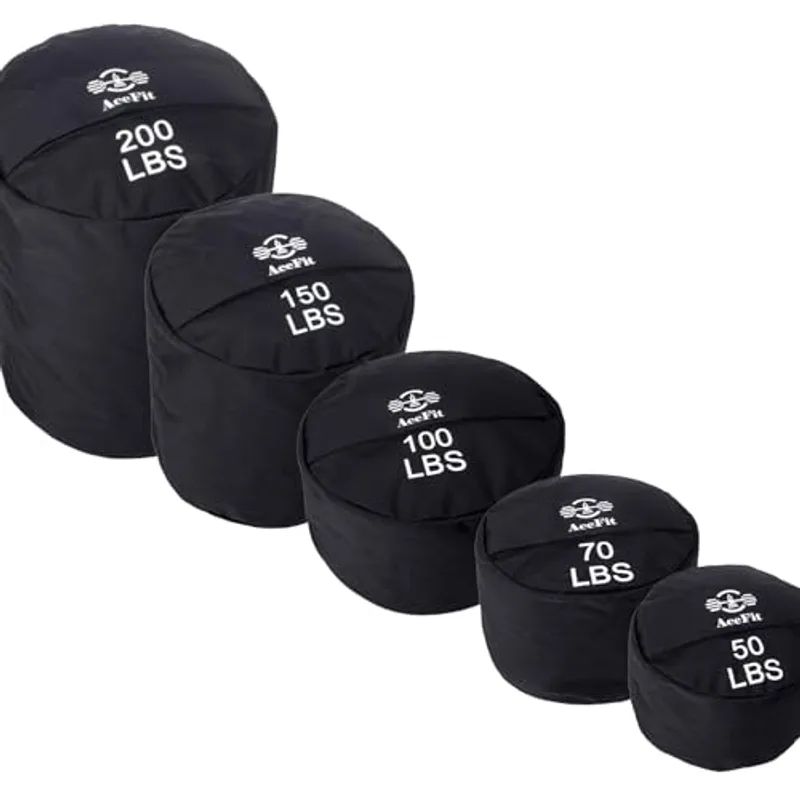
A solid entry-level sandbag that punches above its price point with 1050D nylon construction and a quintuple leak-proof system, though the leather accents feel more decorative than functional.
Best for: Budget-conscious ruckers starting weighted unstable load training
Check Price — $49.99Specifications
| Price | $49.99 |
| Material | Nylon, Leather |
Durability
The 1050D military-grade coated nylon construction puts this bag in the same material class as gear costing twice as much. We appreciate the triple-stitched seams and the fact that Acefit uses the same nylon thread typically reserved for leather shoe construction—a detail that matters when you're repeatedly dropping 50 pounds on concrete or gravel.
The quintuple leak-proof system sounds like marketing speak until you examine it: a built-in filler bag made from 1050D ballistic nylon, a #10 YKK zipper, hook-and-loop closure on the outer shell, heavy-duty Velcro on the filler bag, and those triple-stitched seams. After months of use, this system holds. The outer shell shows expected wear from dirt and sweat, but the coated nylon cleans easily and nothing has torn or separated.
Comfort
Comfort isn't this bag's primary selling point, and that's fine—sandbags aren't meant to cradle you. The shifting sand creates the unstable load that makes this training effective, forcing your stabilizer muscles to work harder than they would with a static plate.
The leather accents on the handles add a marginal improvement in grip comfort, though they're more aesthetic than functional. During extended carries or overhead presses, we found ourselves wishing for slightly wider handles to distribute pressure. The bag itself conforms to your body better than rigid weights, which matters during squats and carries, but don't expect the ergonomic refinement of purpose-built rucking weights.
Features
The adjustable weight system is where this bag earns its keep. You can fill it to your exact training needs rather than being locked into fixed increments. This makes progressive overload training practical—add a few pounds weekly as you build strength without buying multiple bags or plates.
The empty-and-fill portability means you can take this anywhere without lugging 50 pounds through TSA. Fill it at your destination beach, trail, or campsite. The built-in filler bag keeps sand contained in a single reservoir rather than multiple smaller bags, simplifying loading and preventing uneven weight distribution. One note: filling requires a funnel and patience. Don't attempt this on a windy day without containment strategy.
Value
At $50 for 50 pounds of capacity, the value proposition is straightforward. You're getting military-grade materials and construction quality typically found in the $80-120 range. The durability features aren't corner-cutting compromises—they're legitimate quality choices.
Compare this to buying 50 pounds of weight plates ($60-80) plus a carrier ($40-60), and the Acefit comes out ahead while offering more training versatility. The main value limitation is the single-bag design. Serious strength athletes might eventually want multiple filler bags for faster weight changes, but those aren't included. For beginners to intermediate ruckers looking to add unstable weight training without major investment, this hits the sweet spot.
Pros & Cons
Pros
- ✓ Military-grade 1050D nylon construction at budget pricing
- ✓ Quintuple leak-proof system actually prevents sand escape
- ✓ Adjustable weight capacity supports progressive training
- ✓ Empty-and-fill design makes travel practical
- ✓ YKK zippers and triple-stitched seams show quality focus
- ✓ USA-based customer service for warranty issues
Cons
- ✗ Leather accents feel decorative rather than functional
- ✗ Handle width could be wider for extended carries
- ✗ Filling process requires patience and proper equipment
- ✗ Single filler bag limits quick weight adjustments
Frequently Asked Questions
Can I use this sandbag for rucking workouts?
Yes, though it's designed for general strength training rather than purpose-built rucking. The sandbag works well for weighted carries, squats, and lunges that complement ruck training, but it won't fit inside a standard rucksack like plate-style weights. Use it for standalone conditioning work.
What's the best material to fill this sandbag with?
Play sand from hardware stores works best—it's clean, consistent, and widely available. Avoid beach sand due to moisture and debris. A 50-pound bag of play sand costs $5-8. Use a funnel and work slowly to prevent spillage. Some users prefer rubber mulch for a lighter, cleaner alternative.
How does the 1050D nylon compare to cheaper sandbags?
1050D nylon is significantly more abrasion and tear-resistant than the 600D material found on budget sandbags. It's the same grade used in military tactical gear. This means the bag survives concrete drops, rough ground contact, and repeated use without developing weak spots or tears.
Is 50 pounds enough weight for experienced athletes?
For unstable load training, 50 pounds challenges most intermediate athletes due to the shifting sand requiring more stabilization than static weights. However, advanced strength athletes may want the 75LB or 100LB versions. You can also underfill this bag and add weight gradually as you adapt to the unstable load.