Trail-Tested Grip Meets Rucking Stability
The Speedcross has dominated muddy trails for years, but does its legendary traction and lightweight build hold up under ruck weight? We tested these through soggy terrain with 30-pound loads to find out.
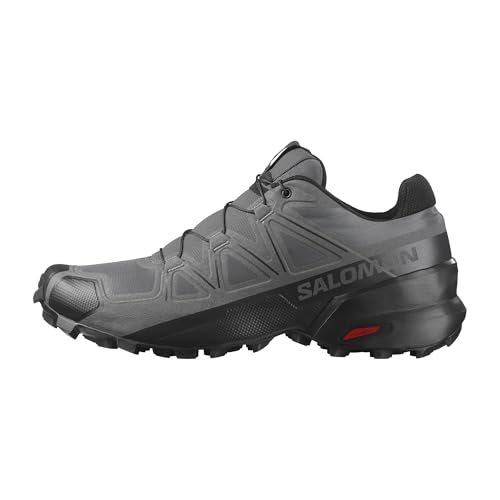
Exceptional grip and nimble feel make these ideal for technical trail rucking, though the racing-oriented design sacrifices some durability you'd find in dedicated hiking boots.
Best for: Technical trail rucking in muddy and mixed terrain
Check Price — $150.00Specifications
| Price | $150.00 |
| Weight | 0.71 lbs |
| Dimensions | 4.7H x 9.1W x 13.8L in |
| Material | Ripstop, Mesh |
Durability
The ripstop and welded upper construction punches above its weight class for a trail runner. We've put these through overgrown singletrack and rocky scrambles with weighted rucks, and the anti-debris mesh has kept debris out while the ripstop fabric resists tears. The welded overlays eliminate stitching weak points that typically fail first.
That said, these are still trail runners, not boots. The lightweight construction means faster wear on high-abrasion areas compared to leather hiking boots. The aggressive Contragrip lugs show minimal wear after 80+ miles, but the midsole will compress faster under ruck weight than burlier footwear. Expect 300-400 miles of mixed rucking before replacement.
Comfort
The Sensifit arms and welded upper create a glove-like fit that feels secure without pressure points. Right out of the box, these required zero break-in time, which trail runners rarely need anyway. The Quicklace system locks down fast and stays tight through stream crossings and hill climbs.
Under load, the specialized heel unit cradles your foot effectively during heavy strikes on descents. However, the cushioning is firm and ground-feel is high—perfect for agility but less forgiving on long road sections. We noticed foot fatigue sets in faster during 10+ mile rucks compared to boots with more midsole padding. The breathable mesh keeps feet cooler than leather alternatives, a major plus in warm conditions.
Features
The Mud Contragrip outsole is the star feature. Deep, sharp lugs bite into soft terrain with authority that inspires confidence on sketchy descents. We tested these on wet clay, loose gravel, and muddy fireroads with 30-pound rucks—they never slipped once. This grip level transforms technical trail rucking.
The single-pull Quicklace system is brilliantly simple and stows in the tongue pocket. No more stopping to retie laces mid-ruck. The anti-debris mesh actually works, keeping trail grit out during dusty summer miles. The disassociated Sensifit arms flex naturally with your foot instead of restricting movement like traditional overlays.
Value
At $150, these sit in competitive trail runner territory but undercut many hiking boots. You're paying for Salomon's refined trail pedigree and grip technology that genuinely delivers. For ruckers who prioritize agility and technical terrain performance over maximum ankle support, this price point makes sense.
The value proposition depends on your rucking style. If you log miles on groomed trails or roads, the aggressive lugs and lightweight build are overkill—save $50 and get road-oriented shoes. But for mixed terrain with mud, roots, and elevation changes, these offer performance that justifies the cost. They won't last as long as $200 leather boots, but they'll outperform them on technical ground.
Pros & Cons
Pros
- ✓ Aggressive Contragrip lugs deliver exceptional traction on mud, loose gravel, and wet terrain
- ✓ Quicklace system allows one-handed tightening and secure stowage
- ✓ Zero break-in period with comfortable, glove-like fit
- ✓ Anti-debris mesh effectively blocks trail grit and mud
- ✓ Lightweight design reduces foot fatigue on technical climbs
- ✓ Welded construction eliminates stitching failure points
Cons
- ✗ Firm cushioning leads to faster foot fatigue on long road sections
- ✗ Shorter lifespan than heavier hiking boots under ruck weight
- ✗ Low ankle support compared to boot-style footwear
- ✗ Aggressive lugs wear faster on pavement
Frequently Asked Questions
Can these handle 30+ pound ruck loads?
Yes, we've tested these with 30-pound loads on technical trails without issues. The heel unit and Sensifit construction provide adequate support for moderate ruck weights, though the firm cushioning becomes noticeable on longer distances. For heavier loads over 40 pounds, consider boot-style footwear with more ankle support.
How do these compare to hiking boots for rucking?
These prioritize agility and grip over maximum support and durability. They excel on technical terrain where nimble footwork matters—muddy singletrack, rocky scrambles, and steep descents. Hiking boots offer better ankle support and longer lifespan but feel clunky on technical ground. Choose these if your routes emphasize terrain variety over pure distance.
Are these waterproof?
No, these use breathable mesh, not waterproof membranes. Your feet will get wet in stream crossings or heavy rain, but they dry faster than waterproof boots. The anti-debris mesh keeps mud and grit out while maintaining breathability. We prefer this for rucking since soggy, sealed boots cause more problems than damp, breathable ones.
How long do the Contragrip lugs last?
We've logged 80+ miles with minimal lug wear, but longevity depends on terrain. These excel on soft trails where the deep lugs grip without excessive abrasion. Frequent pavement use will accelerate wear significantly. Expect 300-400 miles of mixed terrain rucking before the outsole shows meaningful degradation.