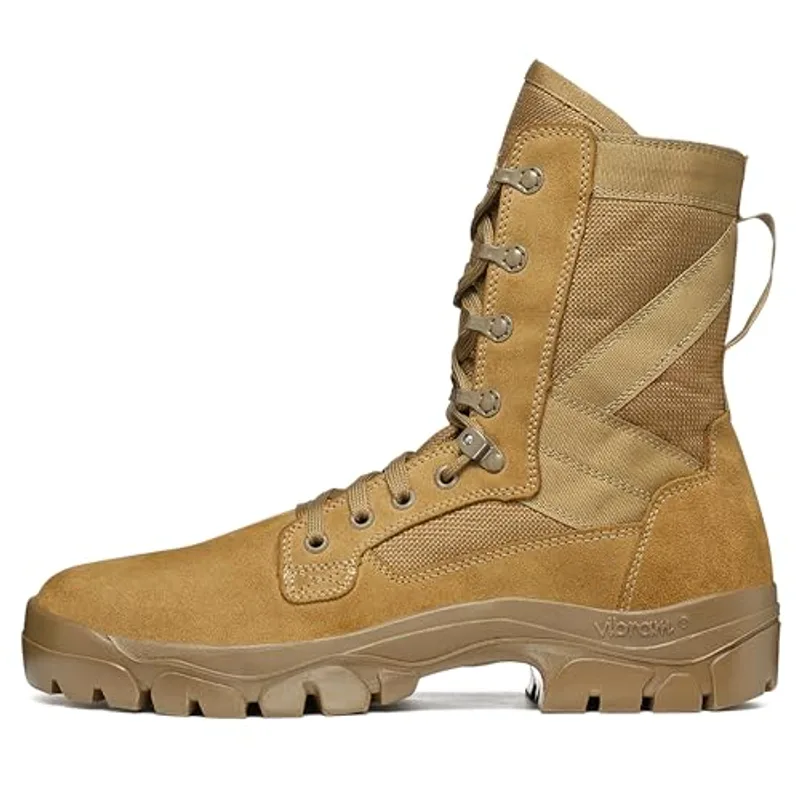
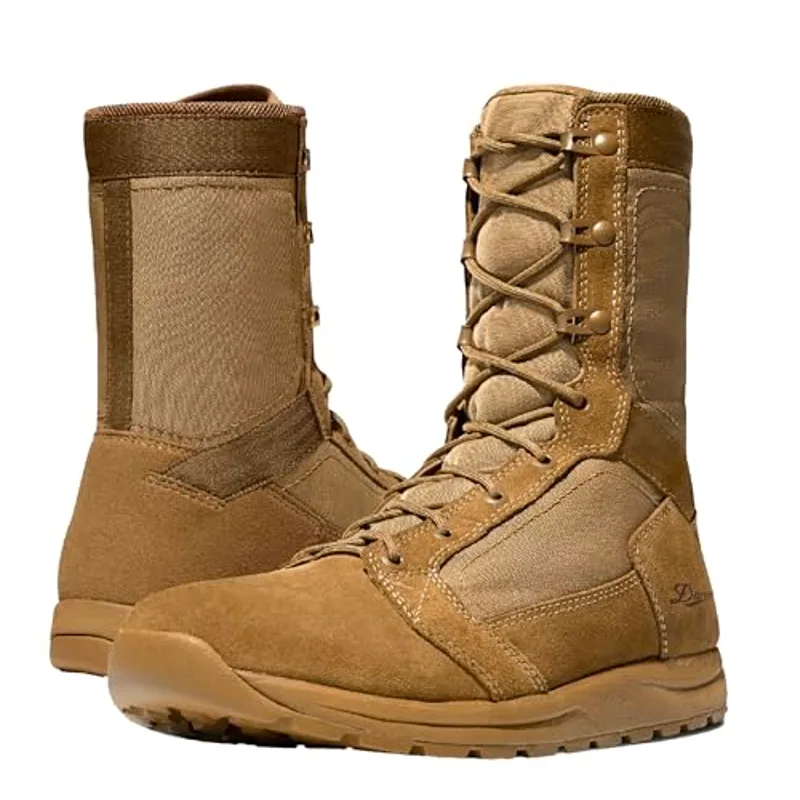
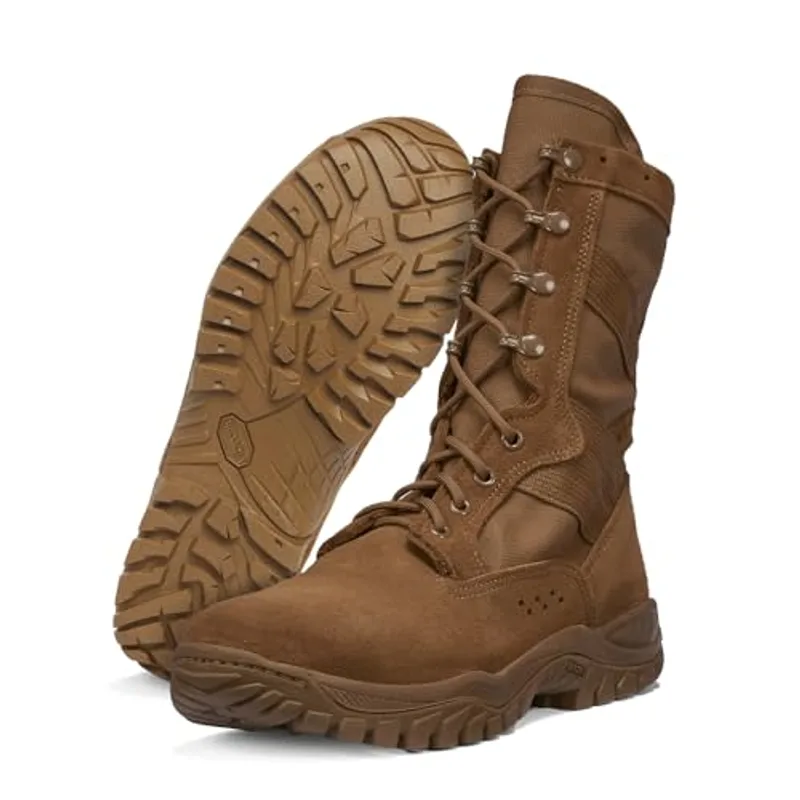
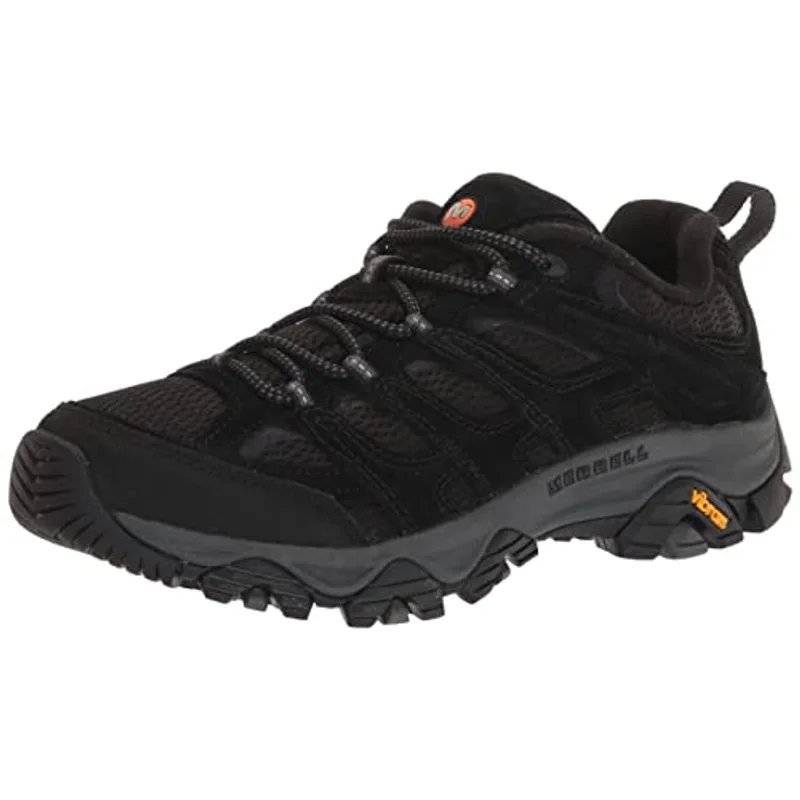
Military-Tough Boots That Won't Break the Bank
The Rocky S2V Predator brings genuine military specs to civilian ruckers without the $300+ price tag. These flame-resistant, ankle-stabilizing boots handle serious miles, though they demand a break-in period that separates weekend warriors from committed ruckers.
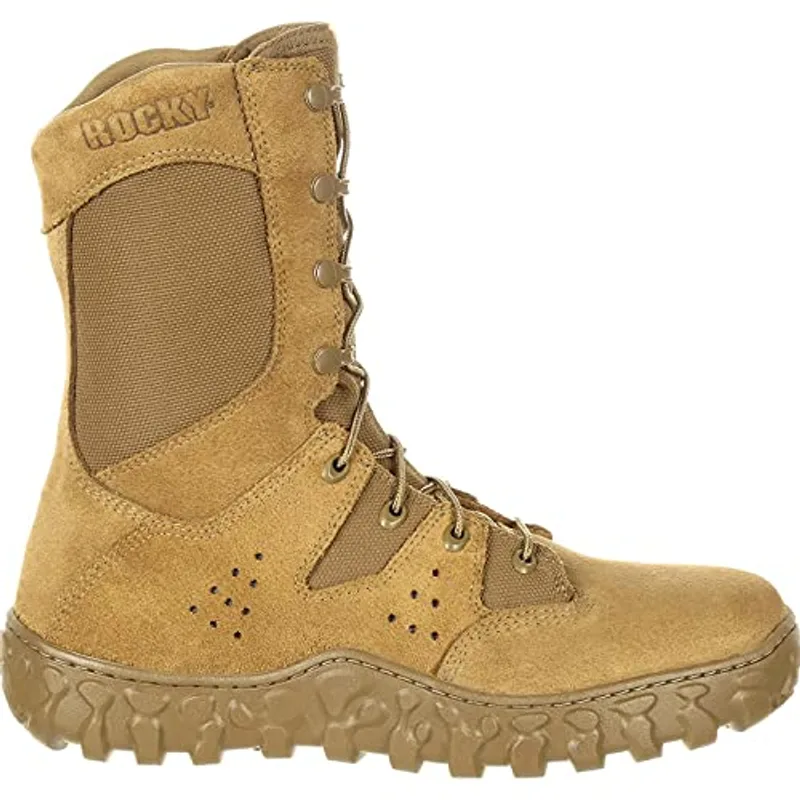
Solid military-grade construction at under $200 makes these boots worth considering, especially if you need flame resistance and ankle support. Just budget time for break-in and accept the 4.2-pound weight as the price of protection.
Best for: Ruckers needing military-grade protection without premium pricing
Check Price — $174.60Specifications
| Price | $174.60 |
| Weight | 4.2 lbs |
| Dimensions | 14H x 6W x 15L in |
| Material | Leather |
Durability
The flame-resistant leather construction meets military standards for a reason—these boots are built to survive hostile environments, which translates perfectly to demanding ruck terrain. The flash- and water-resistant coating holds up against wet conditions better than standard leather treatments.
At 4.2 pounds, the weight reflects genuine protective construction rather than lightweight shortcuts. The PFAS chemical treatment raises environmental concerns but delivers legitimate water and flame resistance that cheaper boots can't match. Expect these to outlast budget boots by years, not months.
Comfort
The Roll-Stop Ankle Stability system genuinely reduces ankle roll on uneven terrain, a feature you'll appreciate around mile five with 30 pounds on your back. This isn't marketing fluff—the lateral support makes a measurable difference on technical trails.
Break-in takes 15-20 miles of serious wear before these boots mold to your feet. The leather is stiff initially, which causes hot spots if you rush into long rucks. Once broken in, the military-spec construction provides reliable support without the pressure points common in cheaper boots. The 4.2-pound weight becomes noticeable on long rucks, but it's the trade-off for legitimate ankle protection.
Features
Flame resistance matters more than most ruckers realize—brush fires, campfires, and accidental exposure happen. The coating meets military specs, which means it's been tested under conditions far more severe than civilian rucking demands.
The unisex sizing runs true to military standards. Women should subtract two sizes from their normal size, a system that works once you understand it but causes confusion on first order. Water resistance performs well in rain and stream crossings, though these aren't waterproof boots—expect moisture penetration in extended wet conditions. The PFAS chemicals deliver performance but come with environmental trade-offs worth considering.
Value
At $194, these boots undercut military-spec competitors by $100-150 while delivering comparable protection and durability. You're paying for legitimate flame resistance and ankle stability systems, not brand markup or marketing.
The value proposition depends on your needs. If you're rucking in challenging terrain or want boots that double for tactical training, this price point is excellent. If you're strictly on paved trails and don't need flame resistance, lighter boots at similar prices might serve better. The durability means cost-per-mile stays low—expect 500+ miles before considering replacement.
Pros & Cons
Pros
- ✓ Military-grade flame and water resistance at civilian-friendly price
- ✓ Roll-Stop ankle stability system reduces injury risk on uneven terrain
- ✓ Genuine protective construction that outlasts budget alternatives
- ✓ Performs reliably in wet conditions and technical trails
- ✓ Under $200 for boots that meet actual military specifications
Cons
- ✗ 4.2-pound weight adds noticeable load on long rucks
- ✗ Requires 15-20 mile break-in period before comfort peaks
- ✗ PFAS chemical treatment raises environmental concerns
- ✗ Unisex sizing causes confusion for first-time buyers
Frequently Asked Questions
How long does break-in take for Rocky S2V Predator boots?
Expect 15-20 miles of serious wear before the leather molds to your feet. Start with shorter rucks and gradually increase distance to avoid hot spots during break-in.
Are these boots actually waterproof?
They're water-resistant, not waterproof. The treated leather handles rain and stream crossings well, but extended submersion will result in moisture penetration.
Why do these boots contain PFAS chemicals?
PFAS provides the flame and water resistance that meets military specifications. It's an environmental trade-off for performance—effective but not eco-friendly.
How does the weight compare to other rucking boots?
At 4.2 pounds, these are heavier than lightweight trail boots but standard for military-spec footwear. The weight reflects genuine protective construction rather than minimal design.
What's the unisex sizing conversion?
Women should subtract two sizes from their normal shoe size to match men's sizing. If you wear women's 10, order men's 8. This follows standard military sizing conventions.