Minimalist Trail Design Meets Rucking Reality
Five-toe shoes divide opinions fast. The Peluva Strand ATR aims to bridge barefoot purists and trail practicality with individual toe slots, zero-drop geometry, and Kevlar reinforcement. After testing with loaded rucks on mixed terrain, we found a capable minimalist option with real tradeoffs.
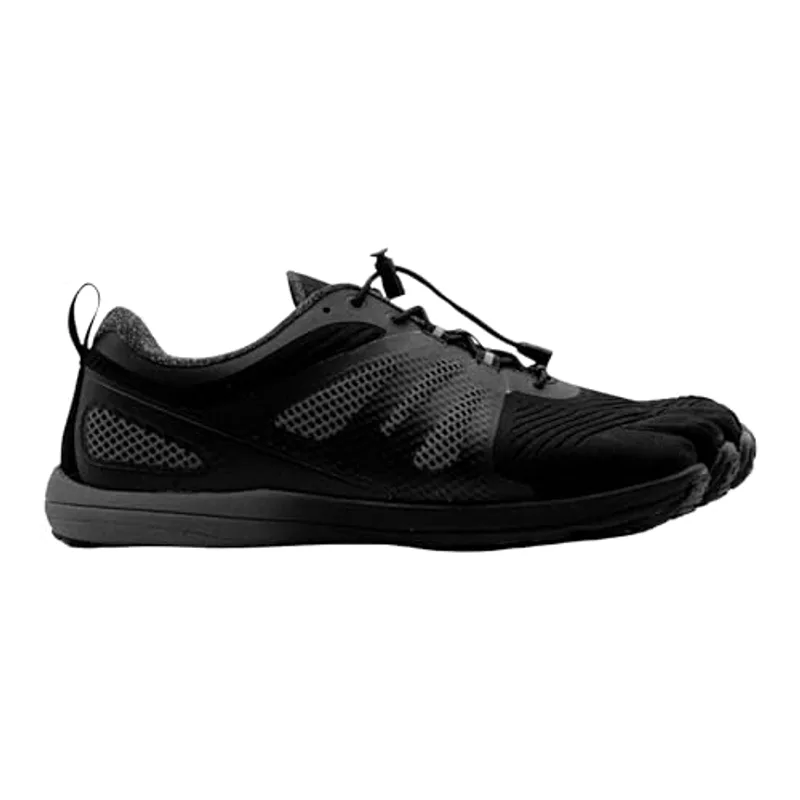
Solid trail minimalist shoe for ruckers transitioning to barefoot-style movement. The individual toe design takes adjustment time, but ground feel and natural stride mechanics deliver once you adapt. Price feels steep for what you get.
Best for: Minimalist ruckers committed to natural foot strengthening
Check Price — $153.00Specifications
| Price | $153.00 |
| Material | EVA, Rubber, Kevlar |
Durability
The Kevlar-reinforced upper handles trail abuse better than standard mesh minimalist shoes. We put these through gravel paths, root-crossed trails, and wet grass with 30-pound rucks without punctures or separation. The anatomically-placed rubber treads show minimal wear after 50 miles of loaded walking.
The EVA midsole compresses predictably under ruck weight without bottoming out on rocks. Stitching around toe pockets remains intact despite the stress of individual toe movement. However, at this price point, we expect more robust construction details than what's delivered here.
Comfort
Individual toe slots feel bizarre initially. Expect a week of short sessions before your feet adapt to the separated design. Once acclimated, the glove-like fit becomes the shoe's biggest asset during long rucks. Your toes spread naturally under load instead of cramping together.
The zero-drop platform forces immediate gait changes. If you're heel-striking with a loaded ruck, your calves will scream after the first mile. Start with unloaded walks to build the necessary muscle adaptations. Ground feel is exceptional—you'll sense trail texture and adjust foot placement instinctively, which improves balance with weight on your back. Size up half as recommended; the snug fit needs that extra room.
Features
Zero-drop geometry delivers on its biomechanical promise. Your posture stays upright under ruck weight, and the midfoot strike pattern reduces knee impact compared to cushioned shoes. The sensory feedback from thin soles helps on technical terrain where you need precise foot placement.
The trail-specific outsole grips wet rocks and loose gravel competently. Tread pattern channels mud effectively without clogging. Water repellency works for splash and light rain but doesn't claim waterproof status. Breathability is adequate for humid conditions, though individual toe pockets trap some heat. The design accommodates any arch type by letting your foot function naturally rather than forcing support.
Value
At $153, these compete with established trail runners offering more conventional comfort and easier adaptation. You're paying for the five-toe design philosophy and Kevlar reinforcement, not premium materials throughout. The EVA foam and basic rubber compound feel mid-tier.
For ruckers committed to minimalist movement and foot strengthening, the investment makes sense. The design delivers measurable benefits for natural gait mechanics under load. But casual ruckers or those unwilling to invest adaptation time will find better value in traditional zero-drop shoes at lower price points. No wide or narrow width options limits fit for many feet.
Pros & Cons
Pros
- ✓ Individual toe slots enable natural foot splay under ruck weight
- ✓ Zero-drop platform improves posture and reduces joint impact
- ✓ Kevlar reinforcement prevents trail punctures effectively
- ✓ Excellent ground feel for technical terrain navigation
- ✓ Trail-specific tread grips wet and loose surfaces confidently
- ✓ Lightweight design doesn't add unnecessary mass
Cons
- ✗ Steep learning curve requires dedicated adaptation period
- ✗ Price premium doesn't match overall material quality
- ✗ Limited width options won't fit all foot shapes
- ✗ Toe pocket heat retention on long summer rucks
Frequently Asked Questions
How long does it take to adapt to five-toe shoes for rucking?
Start with unloaded 1-2 mile walks for the first week. Your toes need time to function independently, and your calves must adapt to zero-drop mechanics. Add ruck weight gradually over 2-3 weeks. Most ruckers feel comfortable after 30-40 miles of progressive training.
Do these work for rucking on pavement or just trails?
They handle both, but excel on trails. The thin sole transmits pavement impact directly to your feet, which can fatigue faster than cushioned shoes on long road rucks. The trail-specific tread and ground feel shine on uneven terrain where sensory feedback matters most.
Should I size up from my normal shoe size?
Yes, order a half size up as Peluva recommends. The individual toe pockets create a snug glove-like fit that needs extra length. Your toes should reach the pocket ends without jamming, especially when rucking downhill with weight pushing your foot forward.
Can these replace my regular rucking boots?
Only if you're committed to minimalist footwear philosophy. These offer zero ankle support and minimal cushioning compared to boots. They're purpose-built for natural foot function and ground feel, not protection and support. Consider them a specialized tool, not a universal replacement.