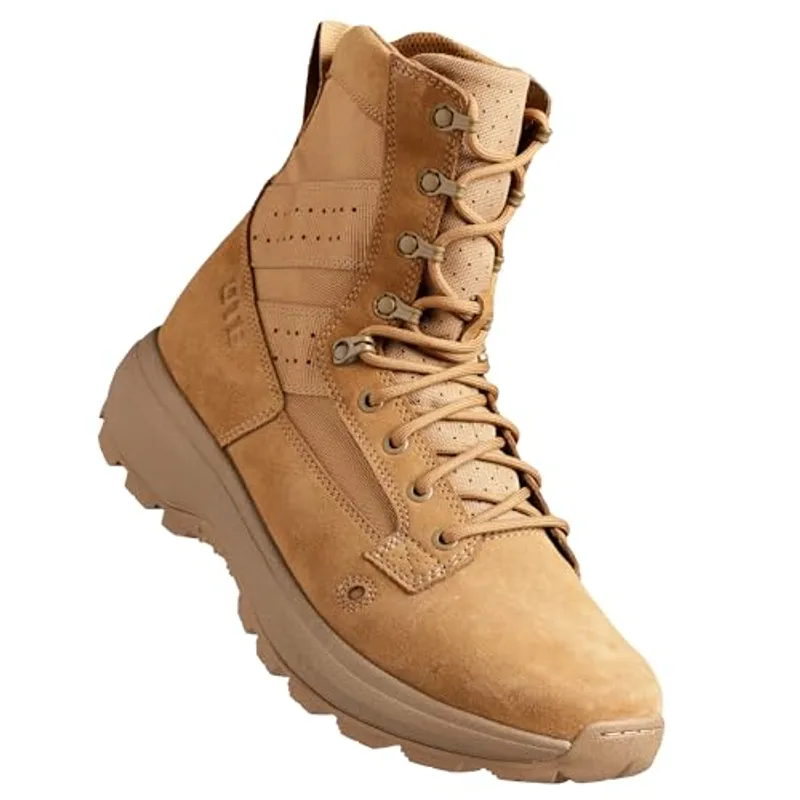
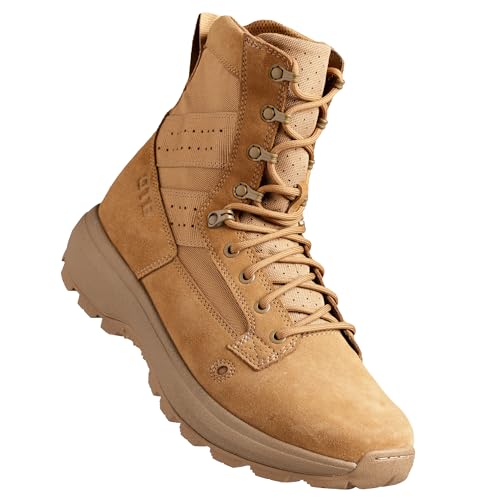
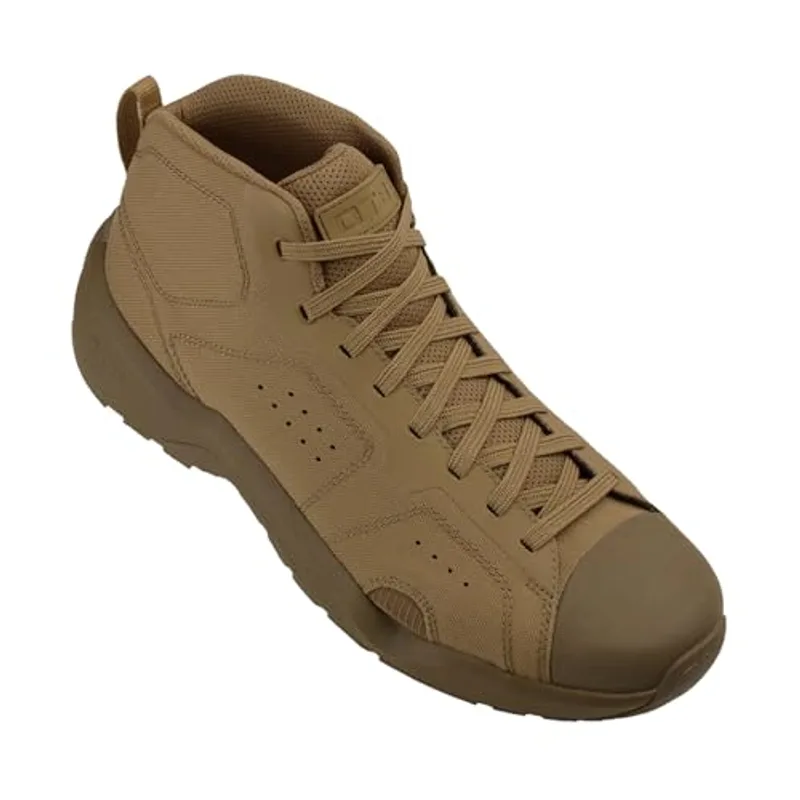
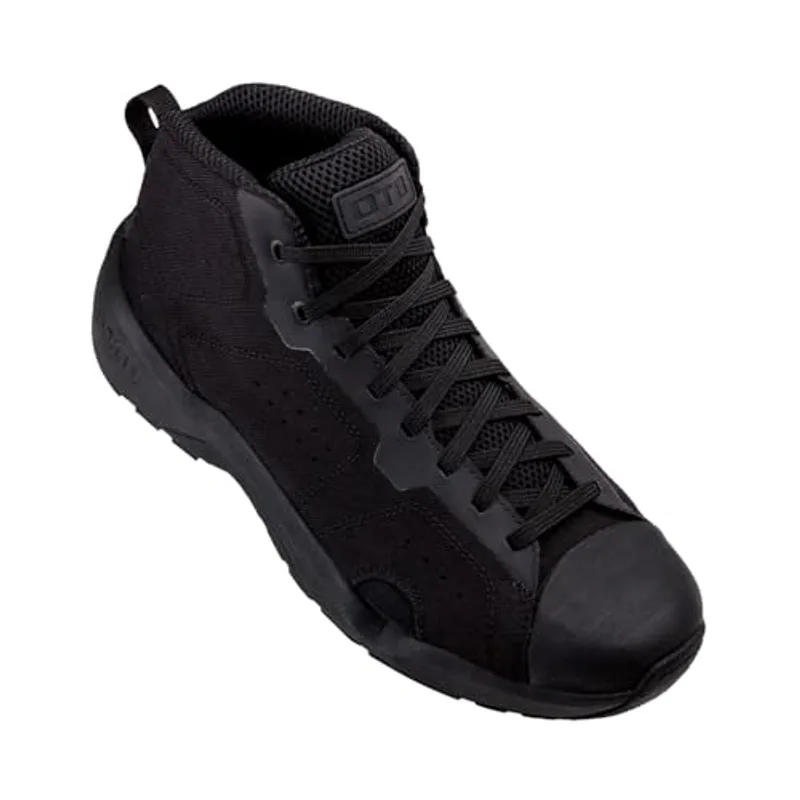
Carbon-Plated Speed Boot for Fast-Paced Rucking
OTB Boots brings carbon plate technology to tactical footwear with the M-Carbon 8. At 3.4 pounds and $190, this boot promises race-day propulsion in a military-compliant package. The question is whether carbon plating translates from road running to rucking terrain.
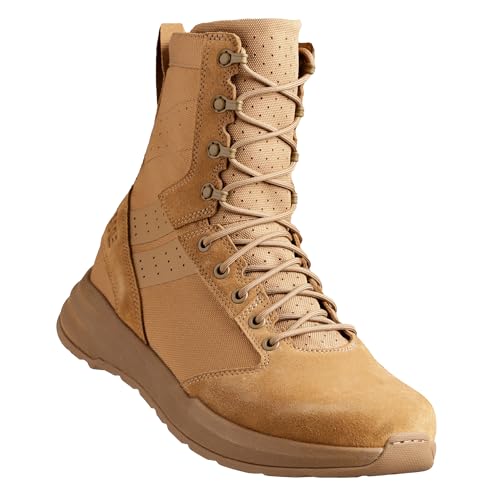
A lightweight, innovative tactical boot that prioritizes speed over heavy-load stability. Best suited for fast movers and lighter rucks under 40 pounds rather than traditional heavy rucking.
Best for: Speed-focused ruckers carrying under 40 pounds
Check Price — $190.00Specifications
| Price | $190.00 |
| Weight | 3.4 lbs |
Durability
The M-Carbon 8 uses water-resistant materials and a slip-resistant outsole designed for tactical environments. At 3.4 pounds per pair, the construction balances weight savings with durability, though the focus on lightweight performance means these won't be as bombproof as traditional 4-5 pound tactical boots.
The carbon plate integration adds structural rigidity that could extend lifespan by reducing midfoot flex fatigue. Water-resistant treatment and quick-dry construction suggest decent weather durability, but long-term abrasion resistance remains unproven without user reviews. AR 670-1 compliance means the construction meets basic military standards.
Comfort
Breathable materials and lightweight design make these comfortable for all-day wear in varied climates. The carbon plate provides forward propulsion similar to road racing shoes, which feels responsive on hard surfaces but may transmit more ground feel than cushioned boots.
The 8-inch height offers standard ankle support without excessive bulk. Quick-dry capability prevents the soggy discomfort common in wet conditions. However, carbon plates can create pressure points during break-in, and the performance-oriented fit may feel less forgiving than traditional cushioned tactical boots. Wide sizing availability addresses fit needs for broader feet.
Features
The carbon plate is the standout feature, borrowed from performance running shoes to deliver forward propulsion and energy return. This works well for sub-40-pound rucks and obstacle courses where speed matters, but may feel overly rigid for heavy rucking or static work.
Slip-resistant outsole and water-resistant construction cover essential tactical requirements. The quick-dry capability is practical for multi-day operations or wet environments. AR 670-1 compliance makes these viable for military use. The breathable design prevents overheating, though it may sacrifice some durability compared to full-leather boots. This is clearly engineered for fast movers, not heavy haulers.
Value
At $190, the M-Carbon 8 sits in the mid-range for tactical boots, though carbon plate technology typically commands premium pricing in running shoes. You're paying for innovation and weight savings rather than proven track record.
Without user reviews, you're taking a calculated risk on new technology. The price is reasonable if the carbon plate delivers genuine performance benefits for your use case—fast rucks, training runs, or obstacle courses. For traditional heavy rucking or general-purpose tactical use, proven designs from established brands offer better value. The wide-width availability adds value for those with fit challenges in standard boots.
Pros & Cons
Pros
- ✓ Carbon plate provides forward propulsion for speed-focused activities
- ✓ Lightweight at 3.4 pounds reduces fatigue on long movements
- ✓ Quick-dry, water-resistant construction for wet conditions
- ✓ AR 670-1 compliant for military use
- ✓ Wide sizing available for better fit options
- ✓ Breathable design prevents overheating
Cons
- ✗ No user reviews to verify real-world performance
- ✗ Carbon plate may feel too rigid for heavy rucking over 40 pounds
- ✗ Lightweight construction may sacrifice durability compared to traditional boots
- ✗ Higher price for unproven technology in tactical footwear
Frequently Asked Questions
What weight rucks are these boots designed for?
OTB specifically rates these for sub-40-pound rucks. The carbon plate and lightweight design prioritize speed over heavy-load stability, making them better suited for fast-paced training and lighter carries than traditional 50-60 pound rucks.
How does the carbon plate affect rucking compared to running?
Carbon plates excel on hard, even surfaces where they return energy with each step. On trails and uneven terrain common in rucking, the rigid plate may feel less adaptive than flexible boots. The benefit is most noticeable during faster-paced movements on roads or packed trails.
Are these suitable for all-day tactical use?
The breathable, lightweight design supports all-day wear, but the performance-oriented carbon plate may feel overly rigid for static work or slow-paced patrols. These excel during active movement rather than standing or walking at slower speeds.
How does 3.4 pounds compare to other tactical boots?
At 3.4 pounds, these are significantly lighter than traditional 4-5 pound tactical boots. The weight savings reduces fatigue during long movements but typically comes with trade-offs in durability and heavy-load stability.
Will these work for obstacle courses and training?
Yes, this is an ideal use case. The carbon plate propulsion, slip-resistant sole, and lightweight construction are well-suited for obstacle courses, training runs, and fast-paced movement drills where agility matters more than load capacity.