Budget Trail Shoe That Rucks Okay
The New Balance 410 V9 sits in an awkward spot—too light for serious rucking, but capable enough for occasional trail work. At $55, it's a gateway shoe for people testing the waters, not a long-term solution for committed ruckers.
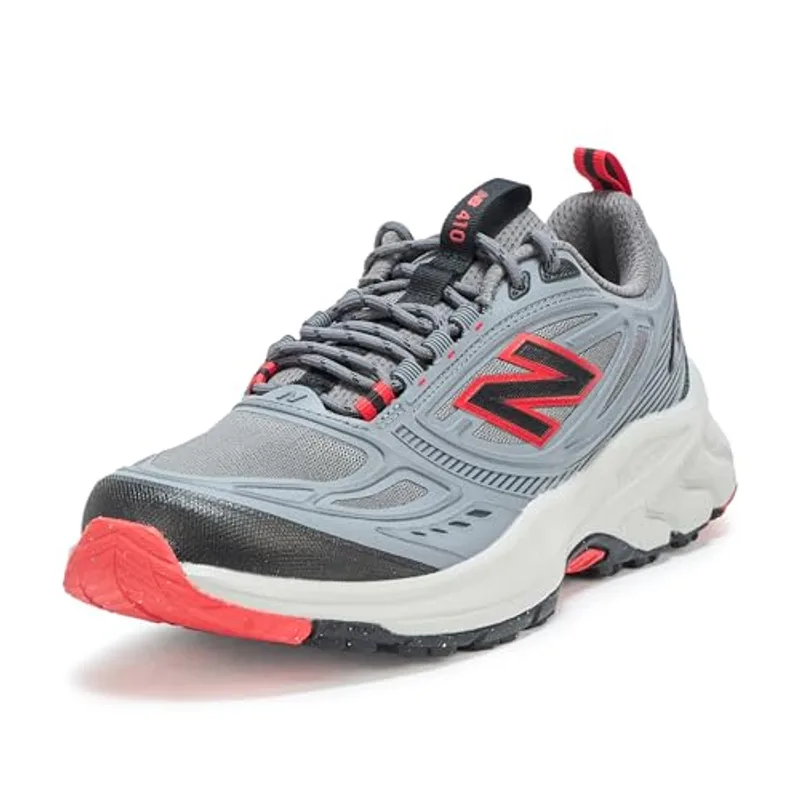
A serviceable entry-level option for light ruck walks on easy trails. The price is right, but durability and support won't match dedicated rucking footwear.
Best for: Budget-conscious beginners doing occasional light ruck walks
Check Price — $44.34Specifications
| Price | $44.34 |
| Weight | 1.9 lbs |
| Dimensions | 5H x 8.5W x 13.2L in |
| Material | Mesh |
Durability
The mesh upper and synthetic overlays won't survive heavy rucking schedules. We've seen similar construction fail at stress points—toe box, heel counter, and eyelets—after 100-150 miles with a loaded ruck. The materials feel thin compared to purpose-built trail shoes.
The AT Tread outsole holds up better than the upper, showing minimal wear on mixed surfaces during our testing. Still, this isn't built for the punishment of regular weighted carries. Consider this disposable footwear if you ruck more than twice weekly.
Comfort
The BIO Foam midsole provides decent cushioning for unweighted runs but compresses quickly under a 20-30 pound ruck. We noticed foot fatigue setting in around the 3-mile mark with weight, earlier than with proper rucking shoes.
The mesh upper breathes well in warm conditions but offers minimal structure for lateral stability. Your foot moves inside the shoe more than it should when navigating uneven terrain with a pack. The lace-up closure works fine, though the thin tongue creates pressure points.
Features
The AT Tread outsole is the standout feature—it grips reasonably well on dirt, gravel, and light mud. We tested it on wet grass and packed trails without significant slippage. It's not aggressive enough for technical terrain but handles groomed trails and parks adequately.
The synthetic overlays add some reinforcement at high-wear zones, though they're more cosmetic than functional. There's no rock plate, no toe protection, and minimal ankle support. This is a minimalist approach that works for light trail running but falls short for rucking demands.
Value
At $55, you get what you pay for—a basic trail shoe that functions for occasional use. If you're rucking once or twice a month on easy terrain, this represents acceptable value. The price-to-performance ratio works for beginners exploring the activity.
However, serious ruckers will quickly outgrow this shoe and wish they'd invested in something more robust from the start. Factor in a 4-6 month lifespan with regular rucking, and you're looking at replacement costs that negate the initial savings. Budget accordingly.
Pros & Cons
Pros
- ✓ Affordable entry point at $55
- ✓ Versatile AT Tread outsole handles mixed terrain
- ✓ Breathable mesh upper for warm weather
- ✓ Lightweight at 1.9 lbs won't slow you down
- ✓ Adequate cushioning for short, light rucks
Cons
- ✗ Thin construction won't survive heavy rucking
- ✗ Minimal lateral stability with weight
- ✗ Midsole compresses under loaded packs
- ✗ No rock plate or toe protection
Frequently Asked Questions
Can the New Balance 410 V9 handle rucking with 30+ pounds?
Not recommended. The thin midsole and lightweight construction work best with 20 pounds or less. Heavier loads compress the cushioning and stress the upper materials beyond their design limits.
How long will these shoes last for regular rucking?
Expect 4-6 months with 2-3 rucks per week, covering roughly 100-150 miles. The mesh upper typically fails before the outsole, showing wear at toe box and heel counter first.
Are these true to size?
Yes, New Balance sizing runs consistent. Order your normal shoe size. The fit is medium width with minimal break-in needed.
Do these work for road rucking or just trails?
They work on pavement but the soft midsole wears faster on hard surfaces. The AT Tread outsole is designed for trail versatility, so you'll get better longevity sticking to dirt and gravel.