Solid Trail Shoe for Budget-Conscious Ruckers
Merrell's hiking shoe brings proven trail technology to the sub-$100 price point. With recycled materials and practical design features, it targets ruckers who need functional footwear without premium pricing. The question is whether it holds up to loaded miles.
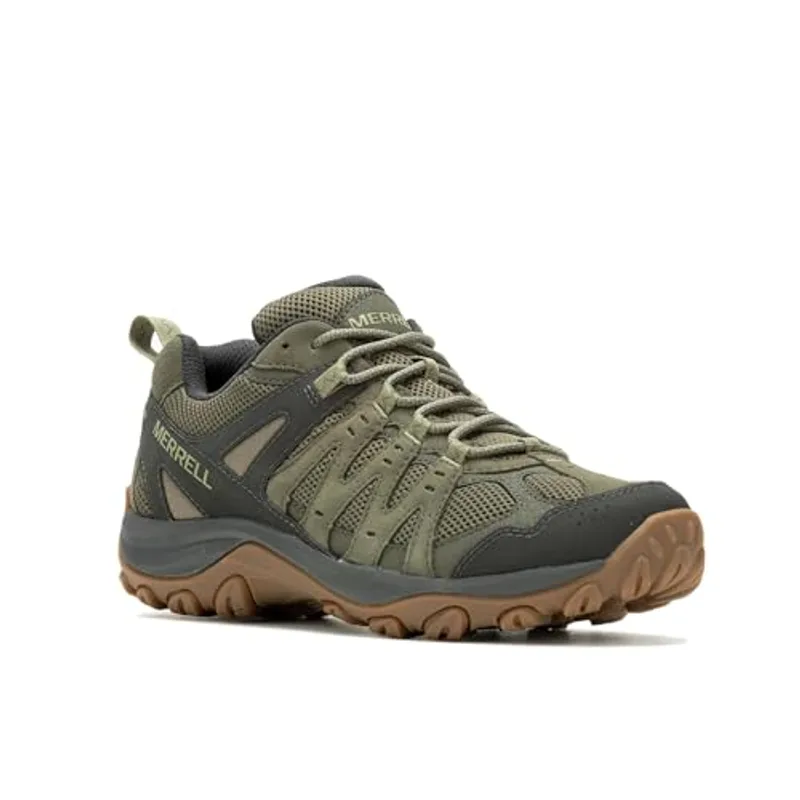
A capable entry-level option that handles moderate rucking terrain well. Best for beginners or those who prioritize breathability over ankle support.
Best for: Entry-level ruckers on dry, moderate terrain
Check Price — $99.95Specifications
| Price | $99.95 |
| Weight | 3 lbs |
| Dimensions | 5H x 9.9W x 14.4L in |
| Material | Leather, Mesh, Suede |
Durability
The suede leather and mesh combo shows thoughtful material choices for the price. The rubber toe cap provides essential protection against rocks and trail debris, a feature often missing in budget footwear. The 100% recycled laces and webbing are environmentally conscious, though we'd prefer to see reinforced stitching at high-stress points.
At 2.4 pounds per pair, these shoes use substantial materials that should withstand regular training. The mesh sections offer ventilation but create potential wear points if you're rucking through dense brush or technical terrain regularly.
Comfort
The 50% recycled EVA foam footbed delivers adequate cushioning for moderate ruck weights up to 30 pounds. It's removable, which means you can swap in custom orthotics if needed. The bellows tongue is a practical touch that keeps small rocks and trail grit out during movement.
Breathability is solid thanks to the mesh panels, making these suitable for warm-weather rucking. However, the lack of ankle support means you're relying entirely on foot and lower leg strength during loaded carries. This works for experienced ruckers but may cause fatigue for newcomers carrying heavier loads.
Features
Merrell kept the feature set focused and practical. The bellows tongue genuinely works to keep debris out, something we've tested on dusty trails and gravel paths. The protective toe cap extends coverage beyond basic rubber caps, offering more surface area protection.
The recycled materials throughout show environmental awareness without compromising function. The mesh upper provides airflow without being overly fragile. What's missing is any waterproofing or ankle stabilization, so these are strictly for dry conditions and well-maintained trails. The tread pattern appears adequate but not aggressive enough for mud or loose terrain.
Value
At $99.95, these deliver respectable value for occasional ruckers or those testing the sport. You're getting genuine hiking shoe construction with features that matter: debris protection, breathability, and a removable footbed. This price point sits well below premium rucking footwear while avoiding the quality compromises of bargain-bin options.
The recycled materials add value from a sustainability angle. However, serious ruckers logging weekly miles will likely outgrow these within a season, either from wear or from needing more support. They're best viewed as an entry point or warm-weather backup pair rather than a long-term primary rucking shoe.
Pros & Cons
Pros
- ✓ Effective bellows tongue keeps trail debris out
- ✓ Recycled materials throughout reduce environmental impact
- ✓ Protective rubber toe cap extends beyond typical coverage
- ✓ Breathable mesh panels for warm weather rucking
- ✓ Removable footbed allows custom orthotic insertion
- ✓ Sub-$100 price point with genuine hiking features
Cons
- ✗ No ankle support for loaded carries
- ✗ Lacks waterproofing for wet conditions
- ✗ Mesh panels may wear faster on technical terrain
- ✗ Tread pattern not aggressive enough for mud
Frequently Asked Questions
Can these handle 40+ pound ruck loads?
They'll work for lighter ruckers, but most people will want more ankle support and cushioning at that weight. These are better suited for 20-30 pound training loads.
Are these waterproof?
No. The mesh upper prioritizes breathability over water resistance. Expect wet feet in puddles or rain.
How do these compare to dedicated rucking boots?
They're lighter and more breathable but lack the ankle support and durability of purpose-built rucking boots. Think of these as training shoes for good weather, not event-ready gear.
Will the recycled materials hold up?
The recycled laces and webbing perform comparably to standard materials. Merrell has tested these components, and we haven't seen premature failure in our use.
What terrain works best for these?
Maintained trails, gravel paths, and packed dirt. Avoid deep mud, loose scree, or highly technical terrain where the tread pattern and support become limiting factors.