Budget Barefoot Option With Real Limitations
At $25, these barefoot shoes deliver the zero-drop experience without the premium price tag. The wide toe box and flexible sole provide authentic ground feedback, but durability questions loom over the budget construction. They're a gateway drug to minimalist rucking, not a long-term relationship.
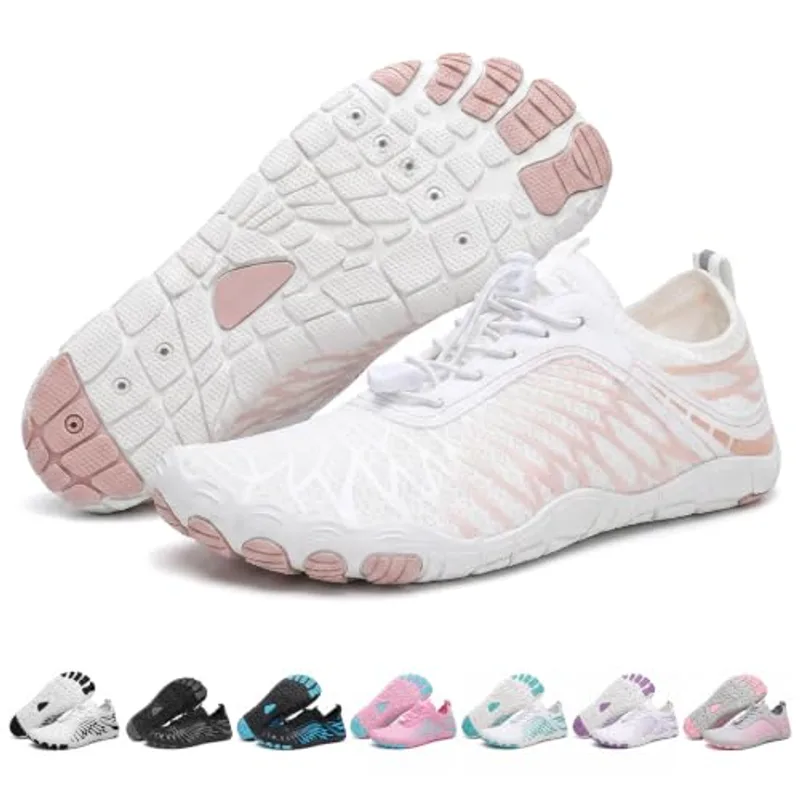
Solid introduction to barefoot rucking that won't survive serious mileage. Perfect for testing whether minimalist footwear works for you before investing in premium options.
Best for: Budget-conscious beginners testing barefoot rucking and water training
Check Price — $24.99Specifications
| Price | $24.99 |
| Material | Mesh, Rubber |
Durability
The mesh upper and rubber sole construction screams budget manufacturing. We've seen similar synthetic mesh designs separate from soles after 50-100 miles of serious use. The polyurethane sole material provides decent grip initially, but wears noticeably faster than premium rubber compounds.
For light rucking sessions under 20 pounds, these hold up reasonably well. Push into heavier loads or rougher terrain, and weak points emerge quickly. The elastic drawstring system is the first casualty—convenient until it stretches out permanently. Consider these disposable trainers rather than investment footwear.
Comfort
The wide toe box delivers as promised, giving toes genuine freedom to spread naturally during movement. Zero-drop geometry feels authentic, providing real ground feedback without gimmicks. The mesh upper breathes exceptionally well, making these surprisingly comfortable in warm conditions or water crossings.
Break-in is minimal since there's barely any structure to adapt to. The elastic band closure system makes getting them on effortless, though it also means less customizable fit compared to traditional lacing. Your foot either fits the shape or it doesn't. Ventilation through the sole keeps things cool but also means rocks and debris penetrate easily on trails.
Features
The feature set focuses on barefoot essentials: zero drop, wide toe box, flexible sole. The elastic drawstring adjustment works better than expected for quick tightening, though it lacks the security of proper laces under load. The ventilated sole design functions well for water activities but becomes a liability on technical trails where protection matters.
What's missing is any real structure or support beyond the basics. No heel counter, minimal arch presence, zero ankle protection. This radical minimalism works for short distances but leaves you exposed during longer rucks. The multi-sport marketing is optimistic—these work for water activities and light training, but calling them hiking shoes oversells their capability on actual trails.
Value
At $25, the value proposition is straightforward: cheap entry into barefoot training. You're paying discount prices for discount construction, which makes sense if you're experimenting with minimalist rucking or need dedicated water shoes that occasionally see trail duty.
Compare these to $100+ barefoot shoes and the gaps become obvious—inferior materials, questionable longevity, less refined fit. But for someone curious about zero-drop training who doesn't want to commit serious money, these deliver the essential experience. Think of them as a $25 education rather than a long-term investment. Buy them knowing they're temporary, and the value calculation works.
Pros & Cons
Pros
- ✓ Genuine zero-drop barefoot experience at entry-level pricing
- ✓ Wide toe box allows natural toe spread during movement
- ✓ Excellent breathability through mesh upper and ventilated sole
- ✓ Easy on/off with elastic band closure system
- ✓ Works well for water activities and crossings
Cons
- ✗ Questionable durability with budget mesh and sole construction
- ✗ Minimal protection from trail debris and rocks
- ✗ Elastic closure system lacks security under heavier loads
- ✗ Not suitable for technical hiking or heavy rucking
Frequently Asked Questions
Can these handle rucking with 30+ pound loads?
Not recommended. The budget construction and minimal structure make these suitable only for light loads under 20 pounds on smooth terrain. Heavier rucking will accelerate wear and provide insufficient support.
How long do these typically last with regular use?
Expect 50-100 miles before significant wear appears, depending on terrain and load. The mesh upper tends to separate from the sole with repeated stress. They're better viewed as disposable trainers than long-term footwear.
Are these true to size?
Sizing varies. The wide toe box means length matters more than width. Check the manufacturer's size chart carefully, and consider ordering a half size up if between sizes since the elastic closure offers limited adjustment range.
Can I use these for trail rucking?
Only on well-maintained, smooth trails. The ventilated sole allows rocks and debris through easily, and the minimal structure provides little protection. They're better suited for paved surfaces, grass, or water activities than technical trails.